French Crop Haircut: Complete Guide to a Modern Classic
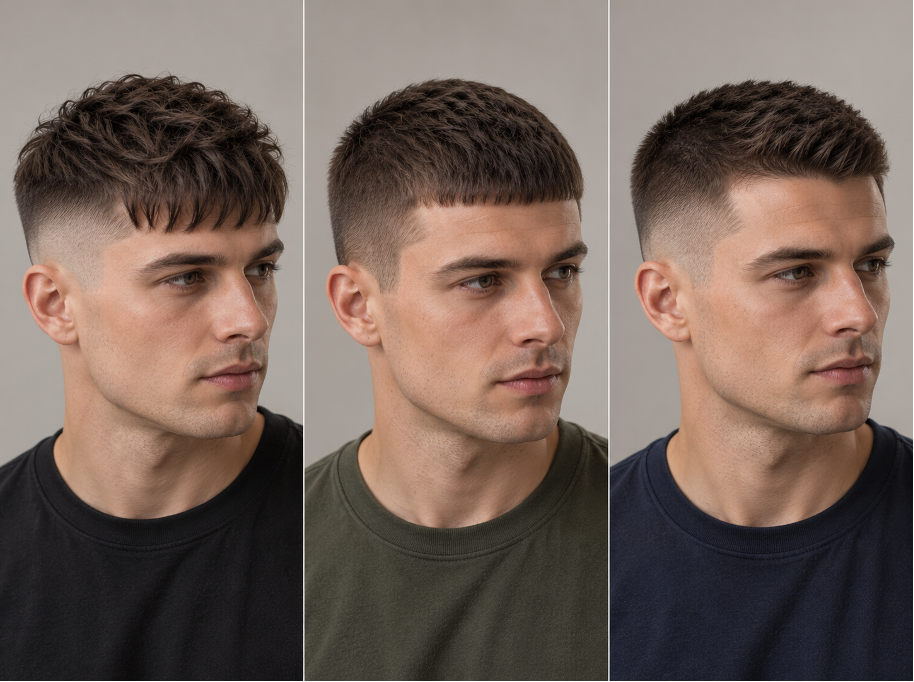
The French crop is a short men’s haircut built around a simple combination: closely cut or faded sides, extra length on top styled forward, and a fringe that can be blunt, choppy, or textured. It can look neat and understated or textured and modern, depending on the fade, fringe, and finish you choose.
Its biggest advantage is flexibility. The basic shape can be adjusted around your facial proportions, hairline, maintenance preferences, and personal style. It can suit straight, wavy, curly, fine, or thick hair, making it a practical option for men who want a short cut with manageable upkeep.
What Is a French Crop Haircut?
A French crop cut is a cropped style that typically features short or faded sides and back with longer hair on top directed toward the forehead. The fringe is the defining feature. It may be a blunt fringe, a short fringe, a straight fringe, or a cropped fringe, while the top can be styled with hair forward. This timeless style has traditional style roots and classic style appeal, yet still offers a modern, high-fashion edge. It originated in 1920s France, inspired by military crew cuts.
The cut is sometimes confused with the Caesar or crew cut. A Caesar generally keeps the overall length more uniform, while a crew cut usually has no defined forward fringe. The French crop creates more contrast through a fade on the sides and gives you more flexibility if you want to get a French crop that feels personalized.Most versions share the same basic elements: a forward-directed top, a defined fringe, tapered or faded sides, and enough length on top to create texture. That flexibility also makes the French crop suitable for a range of face shapes, which is part of why the French crop style remains so popular.
Why Is the French Crop So Popular?
The French crop works particularly well for people who want a low-maintenance haircut without committing to the uniform appearance of a buzz cut.
Most versions require relatively little daily styling, so they can be managed with minimal effort. Once the haircut has been shaped correctly, the top is usually styled fringe forward with your fingers and a small amount of styling product, whether you prefer a French crop low, a French crop fade, or a taper fade. The fringe may be cut as a cropped fringe, including a blunt fringe, straight fringe, or short fringe, while a low or mid fade keeps the sides clean and balanced against the texture on top. This traditional crop approach is one reason the style remains so adaptable.
The forward direction can also suit people who prefer not to emphasize a high forehead, mild temple recession, or receding hairline. That is a big part of why the French crop’s good reputation extends to thinning hair and larger foreheads as well. Rather than pulling the hair away from the face, the crop brings it forward and incorporates the fringe into the overall silhouette.
If you are considering a French crop but are unsure how the fringe, top length, and shorter sides might work with your features, Facefy offers a useful way to explore hairstyle directions before visiting your barber. This can help you narrow down whether you prefer a softer classic crop or a more textured, high-contrast variation. Compared with a Caesar Cut, the fringe is usually shorter here, while a buzz cut is much shorter overall and usually requires no styling. Those differences are part of what makes this cut suitable for many preferences.
Who Does the French Crop Suit?
The French crop can suit many face shapes and hair types, but there is no single variation that works equally well for everyone, so it is better thought of as a minimal effort cut than simply a low-maintenance one.
Face shape is one consideration because fade height, fringe length, and volume on top can influence perceived proportions. You can use a face shape analysis as a starting point, then consider your hair texture, density, hairline, preferred maintenance level, and other hair textures. Many men prefer a low or mid fade or a taper fade because it keeps the look neat without creating overly harsh contrast, whether you want a traditional style or a French crop low variation.
Someone with a visually rounder face may prefer slightly more height or texture on top instead of an extremely flat crop. A longer face may benefit from keeping the fringe noticeable and wearing the hair forward for a bit more coverage rather than adding excessive vertical volume. Angular faces can work with sharp or softer versions depending on the desired effect, which helps explain why the French crop suitable options can extend across different features and why a classic style version still feels adaptable.
These are styling principles rather than strict rules. Personal preference and your natural hair should remain central to the decision, and that is one reason the French crop is often considered a practical choice for thinning hair, a receding hairline, or a larger forehead.
Choosing a French Crop for Your Hair Type
Hair texture affects both the haircut and how you should style it across different hair types and textures.
Fine or thinning hair often benefits from a shorter, textured crop because separation can reduce the visual contrast between areas of different density. Matte products are usually preferable to heavy, shiny formulas that may cause fine strands to clump together. A straight French crop can also work well here when the top is kept neat and controlled.
Thick hair gives a barber plenty of material for creating texture. Point cutting or internal layering can remove excess bulk while retaining enough length for the characteristic forward movement and add texture without making the shape feel heavy. This approach also helps textured hair look more intentional and easier to style.
Wavy hair already provides natural movement, so keeping slightly more top length can showcase its pattern. A wavy French crop leans into that natural shape for a relaxed finish, while a fluffy French crop creates a softer, more youthful look with extra lift. Curly hair generally benefits from enough length for curls to form properly. A curly French crop works best when the shape follows the curl pattern rather than forcing it into a rigid line, and it can look especially striking on darker hair. Rather than forcing curls into a rigid line, the barber can shape the fringe around their natural movement. That flexibility is why the French crop suits different face shapes, since its classic style and traditional style can be adapted to different facial features and preferences.
Classic French Crop vs. Textured French Crop
The classic and textured versions use the same basic structure but create noticeably different finishes.
A classic French crop follows a traditional style and usually features a more defined fringe, often a straight fringe or blunt fringe, a controlled top, and a clean taper or fade. It works well when you want a polished haircut that does not require elaborate styling.
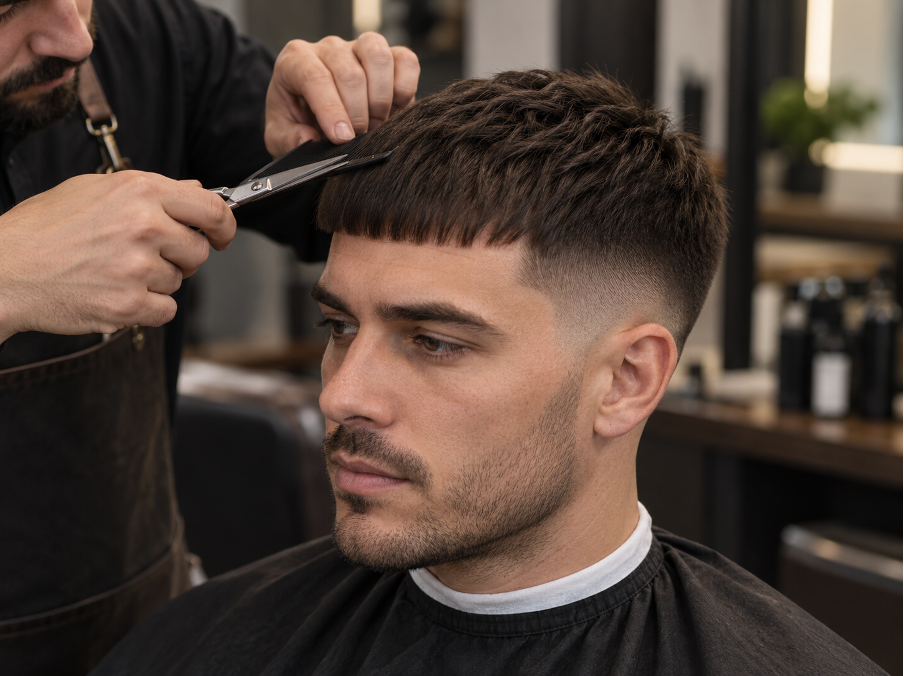
A textured French crop keeps the same core shape but leans into a choppy fringe and more movement through the top. For thick hair, point cutting can add texture without excess bulk, and for straight hair, a cleaner, more defined outline is often easier to see on darker hair. For wavy hair, this can work especially well as a Wavy French Crop, and a fluffy French crop is simply a softer, more voluminous take on the same idea. For curly hair, a Curly French Crop usually keeps voluminous curls on top with faded sides. Matte clay, styling cream, or other styling products can emphasize individual sections.
Neither version is inherently better. Choose the classic style if you prefer a predictable, cleaner shape. Choose a textured version if you want more movement and a relaxed finish.
Popular French Crop Variations
The basic French crop can be adapted in numerous ways.
A French crop low fade keeps the transition close to the ears and neckline for a subtle, clean result. A French crop mid fade creates stronger contrast without taking the transition extremely high, while a high fade French crop makes the top and fringe more visually prominent. For an even sharper look, a French crop fade can also be paired with a high skin fade or a drop fade depending on how bold you want the sides and back to look.
A French crop taper uses a gradual transition for a softer finish, while a classic skin fade gives the cut a cleaner, more rebellious edge. Curly and wavy French crops preserve enough top length for natural texture to remain visible. A short french crop keeps both the fringe and top compact, while a long French crop retains additional length for softer styling.
Other variations include a messy French crop, straight, fluffy, and French crop mullet styles. These change the texture, volume, or back length while maintaining the forward-focused front that identifies the crop.
French Crop vs. Caesar Cut vs. Crew Cut
The easiest way to distinguish these haircuts is to examine the fringe and relationship between the top and sides.
The French crop usually has a defined blunt or textured fringe with faded or tapered sides. The Caesar keeps the top and fringe more uniform with less contrast. A crew cut is short and structured but generally lacks the prominent forward fringe associated with the French crop.
The boundaries are not always rigid. Modern barbers frequently combine techniques, so showing reference photos is often more useful than relying on a haircut name alone.
How to Choose Your French Crop Before the Appointment
Before deciding on the final variation, consider how the entire haircut will frame your face rather than choosing the fade or fringe separately.
This is where Facefy can be especially useful. You can explore different hairstyle directions before committing, then use the ideas you prefer as references when discussing fringe length, texture, and side contrast with your barber. Facefy’s hairstyle try-on can also help you compare short-hair proportions using a photo.
Virtual previews should be treated as inspiration rather than exact predictions. Camera angle, lighting, hair visibility, density, texture, and the barber’s technique all influence the real result.
How to Ask Your Barber for a French Crop
Simply saying “French crop” gives your barber a general direction, but several details determine the final appearance.
Tell your barber how much length you want on top and whether you prefer a classic or heavily textured finish. Specify whether you want a low, mid, or high fade, a skin fade, or a softer taper with a fade on the sides.
Pay particular attention to the fringe. Explain whether you want a blunt fringe, a cropped fringe, a short fringe, or more length for extra forehead coverage.
Bring two or three reference images showing similar hair texture whenever possible to show how to get a French crop style more clearly to your barber. A haircut photographed on straight, dense hair may behave differently on fine, curly, or wavy hair, whether you want a straight French crop or a curly French crop. These saved examples also make it easier to discuss how to get a french crop and later styling tips during the appointment.
How to Style a French Crop at Home
Start with slightly damp hair and apply a lightweight pre-styler if needed. Direct the top forward with your fingers and blow-dry in the same direction when you want additional volume or control.

Work a small amount of styling product through the top, then pinch or separate sections of the fringe until the texture looks natural. Straight hair often responds well to matte clay or paste, while wavy and curly hair may benefit from a lighter cream.
Avoid automatically adding more products when the style does not hold. Excess product can weigh down the top and make the crop appear flatter.
Maintenance and Grow-Out
Maintenance depends heavily on the fade. Skin fades and sharply defined crops lose their crisp appearance sooner, while softer tapers and longer crops generally grow out more gradually.
Between appointments, focus on normal hair care rather than trying to recreate the fade yourself. If the fringe becomes too long, remember that the front outline is one of the defining elements of the haircut, so structural changes are usually best left to your barber.
Choosing the Right French Crop for Your Style
The best French crop is the version that works with your hair and routine. Consider how frequently you are willing to visit your barber, how much styling you want to do, your natural texture, hair density, fringe length, and preferred contrast between the top and sides.
For a conservative result, consider a classic crop with a low fade or taper. For more movement, retain additional length on top and request a choppier fringe. If you prefer maximum contrast, a higher fade can make the textured top more prominent.
The French crop remains versatile because its basic structure leaves plenty of room for personalization. Get the fringe, top length, texture, and fade working together, and you have a practical short haircut that still feels distinctive.