
Is a 4-Zone Mini Split Right for a 3-Bedroom House?
Three bedroom doors close at night, while the living room is used mostly during the day. That pattern can make a 4 zone mini split a sensible match: one indoor unit can serve each bedroom and a fourth can condition the shared living area. Four zones are not automatically necessary, however, simply because the house has four main rooms.
The better decision comes from comparing room use, heat gain, airflow, and calculated loads. DELLA offers room-by-room configurations as well as broader mini split AC options, so homeowners can consider the layout before choosing a zone count. An open kitchen and living room may share one zone, while an isolated bedroom may not.
Do Three Bedrooms and a Living Room Need Four Zones?
Four frequently occupied, separated spaces are a strong starting case for four zones. The living room normally needs daytime cooling or heating; bedrooms often need comfort later and at different setpoints. Yet room count alone is not enough. A small bedroom that remains open to a conditioned hall may behave differently from a sunny corner bedroom with a closed door. Also account for bathrooms, kitchens, stairways, and additions that are not named in the simple “three bedrooms plus living room” plan. If those spaces have significant loads, four heads may not distribute comfort the way the room labels suggest.
Closed Bedrooms Usually Need Their Own Units
A wall-mounted indoor unit moves conditioned air within the room where it is installed; it does not push air through a closed door like a ducted supply register. For that reason, each bedroom that stays closed for sleeping usually needs a direct source of heating and cooling. Leaving a door open may allow some mixing, but the result depends on hallway airflow and temperature differences, not a dependable design path. Before assigning a head to every bedroom, note whether any room is rarely occupied, whether doors remain open, and whether transfer grilles or another approved airflow solution already connects the spaces.
How Many BTUs Does Each Room Need?
Start with each room’s load rather than dividing the outdoor unit’s nominal capacity by four. Floor area matters, but so do ceiling height, insulation, window size and direction, local climate, occupancy, and heat-producing electronics. A west-facing primary bedroom may need more cooling than a larger shaded bedroom. The living room may gain heat from a kitchen, large glass doors, or frequent gatherings. An HVAC professional can calculate the sensible and latent loads for each zone, then match available indoor-unit capacities without substantially oversizing small rooms. This approach also checks heating needs, which may govern selection in a colder region.
Can One Condenser Carry All Four Zones?
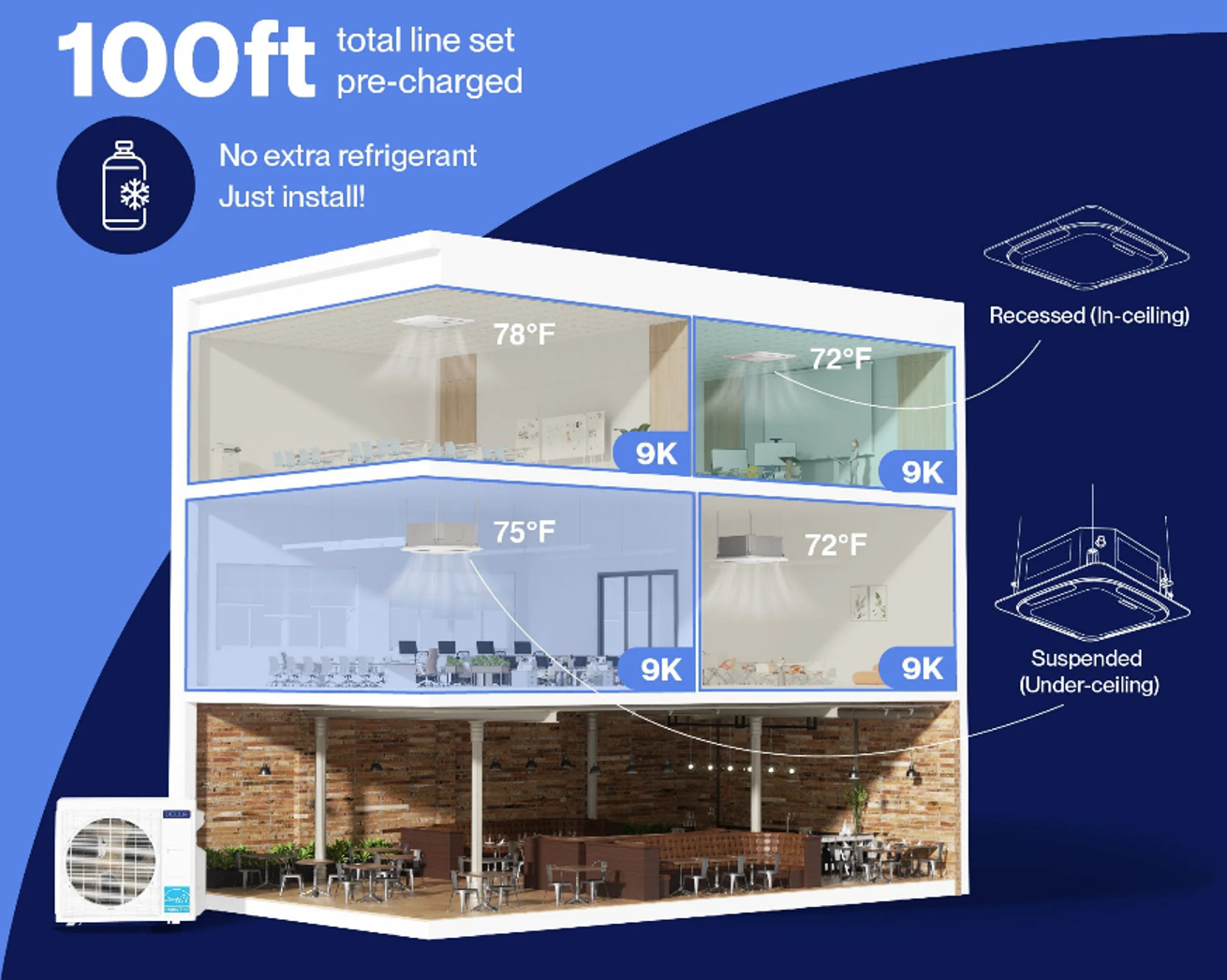
Yes, when the outdoor unit is designed for four connected indoor units and selected for the home’s calculated demand. The connected indoor-unit ratings may not equal the condenser’s nominal rating, so the manufacturer’s approved combination data matters. When several rooms call at once, the system allocates available capacity among active zones; it does not create the full outdoor rating for every head simultaneously. Most conventional multi-zone systems also operate in one overall mode at a time, meaning one room cannot cool while another heats. Proper refrigerant piping, electrical work, commissioning, and model-compatible combinations belong with a qualified installer.
Four Zones vs Other Whole-Home Options
Four zones work well when occupants want independent room control and the house lacks useful ductwork. A smaller multi-zone arrangement may be enough if two bedrooms can share another reliable conditioning strategy. Several single-zone systems can offer greater redundancy and strong part-load matching, but they require more outdoor units and exterior space. Central ducted HVAC keeps indoor equipment less visible and can serve bathrooms and halls through registers, although leaky or poorly routed ducts can undermine comfort. Compare installation constraints, service access, operating patterns, appearance, and backup heat—not only the number of thermostats or the initial equipment price.
For a three-bedroom house, four zones make the most sense when all bedrooms are regularly occupied, their doors stay closed, and the living area has a distinct schedule. Confirm that conclusion with room-by-room load calculations and an approved equipment combination before buying. Include future room-use changes in that conversation as well.