
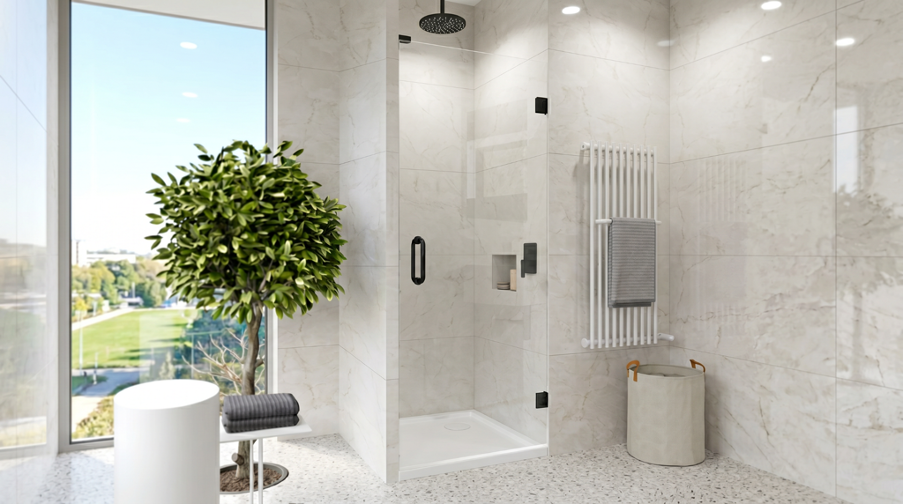
Hinged Shower Doors in Modern Bathroom Design and Architecture
Hinged shower doors are one of the most widely used solutions in modern bathrooms because they combine clean design, strong functionality, and long-term durability. In many U.S. homes, a swing-style glass door attached with side-mounted hinges is preferred over sliding systems due to its wide entry opening and premium frameless appearance. These hinged shower doors rotate outward or inward on fixed hinges, creating a smooth and stable access point for shower enclosures.
This article breaks down everything you need to understand about hinged, pivot-style, and swing glass shower doors, from design types and materials to installation considerations, benefits, limitations, and selection factors used in the U.S. market.
What Are Hinged and Swing Glass Shower Doors?
A hinged or swing shower door is a glass panel attached to the wall or a fixed frame using metal hinges. Unlike sliding systems, the door opens like a regular entry door. In the U.S. market, you’ll also hear them referred to as:
- Pivot shower doors
- Swing glass shower doors
- Frameless hinged shower enclosures
- Side-hinged shower doors
- European-style shower doors
All of these refer to the same core concept: a door that rotates on hinges instead of sliding on a track.
The key design advantage is simplicity. With fewer moving parts compared to bypass systems, these doors often deliver a more open, spacious feel and are commonly used in luxury bathroom remodels.
How Pivot and Swing Shower Doors Work
The mechanism is straightforward but engineered for precision. The glass panel is secured using heavy-duty hinges mounted either on a wall channel or directly into tiled walls with reinforcement anchors. These hinges support both weight and movement, allowing controlled rotation.
There are typically two movement styles:
- Outward swing: The door opens toward the bathroom exterior
- Inward swing: The door opens inside the shower area
- Dual swing (bi-directional): Opens both ways for flexibility
Modern frameless pivot shower doors often include soft-close hinges or hydraulic dampers, preventing slamming and improving safety.
Types of Swing and Hinged Shower Door Designs
Understanding variations helps you choose the right configuration for your bathroom layout.
Frameless Hinged Shower Doors
Frameless designs use thick tempered glass (usually 3/8” or 1/2”) without bulky metal framing. Only hinges, handles, and minimal seals are visible. This style dominates high-end U.S. bathroom designs because it maximizes visual space.
Semi-Frameless Swing Doors
These include minimal framing around certain edges while keeping the main panel mostly exposed. They offer a balance between affordability and aesthetics.
Framed Pivot Shower Doors
Framed versions use aluminum or stainless steel around the perimeter. They are more forgiving during installation and often used in budget-friendly remodels or rental properties.
Neo-Angle Hinged Doors
Designed for corner showers, these doors are angled and open from a pivot point, making them ideal for compact bathrooms.
In-Swing vs Out-Swing Doors
- In-swing doors conserve bathroom space but require a properly sealed interior floor slope
- Out-swing doors require clearance but improve safety in case of water leakage or obstruction
Materials Used in Swing Glass Shower Doors
Material quality directly impacts durability and safety.
Tempered Safety Glass
This is the standard across the U.S. market. It is heat-treated to increase strength and shatters into small, less harmful pieces if broken.
Common thickness options:
- 1/4” (light-duty framed systems)
- 3/8” (standard frameless doors)
- 1/2” (premium heavy glass doors)
Hardware Materials
Hinges and handles are typically made from:
- Stainless steel (most durable, corrosion-resistant)
- Brass (premium feel, heavier construction)
- Aluminum (lighter and more affordable)
Finishes include brushed nickel, matte black, chrome, and oil-rubbed bronze.
Seal Components
Water control depends on vinyl sweeps, magnetic strips, and jamb seals placed strategically along edges.
Benefits of Hinged and Pivot Shower Doors
These systems are popular for practical reasons, not just appearance.
1. Wide Entry Access
Unlike sliding doors that block half the opening, swing doors provide full-width access, making them ideal for accessibility and comfort.
2. Clean Modern Aesthetic
Frameless pivot shower doors remove visual clutter, creating a minimalist spa-like environment.
3. Easier Maintenance
Fewer tracks mean fewer places for mold, soap scum, or dirt buildup.
4. Long-Term Durability
High-quality hinges and tempered glass systems can last decades if properly installed.
5. Flexible Design Integration
They work with corner showers, alcove enclosures, and custom glass layouts.
Limitations You Should Not Ignore
Most homeowners focus only on aesthetics and overlook practical constraints.
- Space Clearance Requirement: A swing door needs free space to open. In tight bathrooms, this becomes a functional limitation.
- Water Containment Risks: Poor installation or incorrect threshold slope can lead to water leakage outside the shower area.
- Heavier Structural Load: Frameless glass systems require reinforced walls. Weak anchoring leads to hinge failure over time.
- Cost Factor: Compared to sliding systems, pivot shower doors often cost more due to hardware quality and installation precision.
Where Hinged Shower Doors Work Best
Not every bathroom benefits equally from this design.
They are ideal for:
- Medium to large bathrooms with clearance space
- Luxury home renovations
- Master bathroom walk-in showers
- Minimalist or modern interior designs
- Custom glass shower enclosures
They are less suitable for:
- Extremely small bathrooms
- Narrow layouts with limited swing space
- Low-budget rental renovations
Installation Considerations (What Matters Most)
Installation quality matters more than the product itself.
1. Wall Strength and Anchoring
Glass doors rely heavily on hinge stability. Weak tile backing or hollow walls can cause long-term structural failure.
2. Level Alignment
Even a minor tilt can cause door misalignment, poor sealing, or hinge stress.
3. Threshold Design
A properly sloped threshold or shower curb ensures water flows back into the enclosure.
4. Glass Weight Distribution
Heavier 1/2” glass panels require reinforced hinges and sometimes top support brackets.
Poor installation is the most common reason swing shower doors fail, not the product itself.
Maintenance and Longevity
Maintenance is simple but often ignored.
Key practices include:
- Regular wiping of glass to prevent mineral buildup
- Cleaning hinge areas to avoid corrosion
- Checking seal strips every few months
- Avoiding harsh acidic cleaners on hardware finishes
A well-maintained frameless swing glass door system can easily last 15–20 years.
How to Choose the Right Shower Door System
Selecting the right configuration depends on more than appearance.
Bathroom Layout First
Measure clearance before selecting a pivot system. If the door cannot swing freely, it will fail in daily use.
Glass Thickness Decision
- 3/8” is standard for most homes
- 1/2” is better for luxury or oversized panels
Hardware Quality
Cheap hinges are the fastest failure point. Stainless steel is the safest long-term choice.
Design Compatibility
Match finishes with faucets, handles, and lighting fixtures for visual consistency.
Function Over Aesthetics
A visually perfect door that leaks or jams is a bad investment.
Common Mistakes Homeowners Make
Most issues come from poor planning rather than product flaws.
- Choosing oversized glass for small bathrooms
- Ignoring door swing direction
- Using low-grade hardware to save cost
- Skipping professional installation
- Underestimating water splash zone
These mistakes turn a premium system into a daily frustration.
Final Takeaway
Swing and pivot-style shower systems are not just a design upgrade—they are a structural decision. When properly selected and installed, they deliver a premium experience, long-term reliability, and a clean architectural look that sliding systems rarely match. But they are not universal solutions. Without correct space planning and installation discipline, they quickly become inconvenient rather than elegant. Choosing them blindly for aesthetics is a mistake. Choosing them with proper layout awareness is what turns a standard bathroom into a well-executed modern space.