Frameless LED Wall Mirror: How to Choose the Right Lighting and Features
Bathroom mirrors have evolved beyond simple reflective surfaces. Modern designs combine practical illumination, clean aesthetics, and convenient technology to make every day grooming easier. Among these options, illuminated mirrors have become increasingly popular in contemporary bathrooms, bedrooms, dressing areas, and other interior spaces. A well-designed Frameless LED Wall Mirror combines integrated lighting with a minimalist appearance, eliminating the need for a traditional decorative frame. However, choosing the right model involves more than selecting an attractive shape. Lighting direction, color temperature, brightness, electrical requirements, glass quality, and installation all influence how well the mirror performs.
Understanding these details helps homeowners make informed decisions and avoid common mistakes when planning a bathroom upgrade or redesign.
What Is a Frameless LED Wall Mirror?
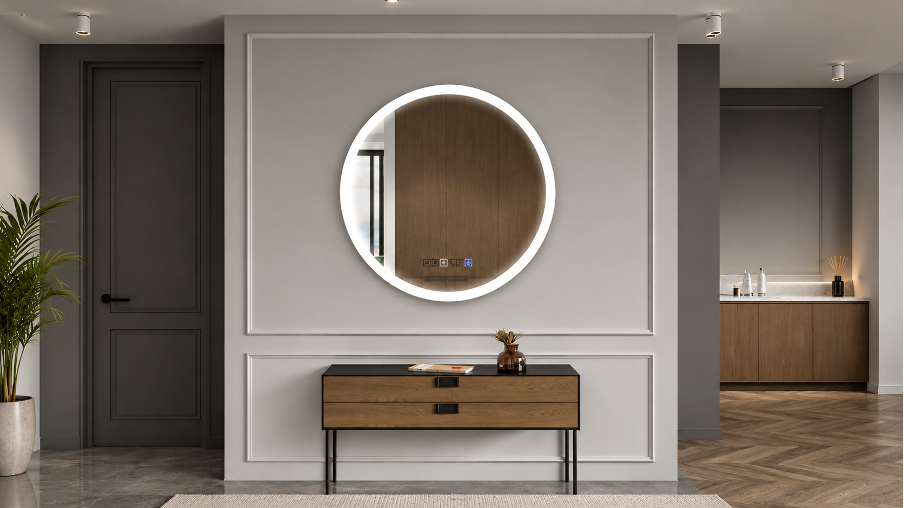
A frameless illuminated mirror is a wall-mounted reflective surface with LED lighting integrated into or behind its construction. Unlike traditional mirrors surrounded by wood, metal, or plastic borders, this design features exposed glass edges that create a streamlined appearance.
The lighting system typically uses energy-efficient LED strips positioned behind the glass, along its perimeter, or within specially designed illuminated sections. Depending on the configuration, the light can shine directly toward the user or create a soft glow against the surrounding wall.
This combination makes illuminated mirrors suitable for contemporary interiors where simplicity, functionality, and efficient space utilization are important.
Most models include additional features such as touch-sensitive controls, adjustable brightness, multiple lighting temperatures, and optional anti-fog technology. However, available functions vary by manufacturer and model.
Backlit vs. Front-Lit LED Mirrors: Understanding the Difference
One of the most important decisions when selecting an illuminated mirror is determining how its lighting should function. Backlit and front-lit designs may look similar in product photographs, but they produce different lighting effects.
How Backlit LED Mirrors Work
Backlit mirrors contain LED strips positioned behind the reflective glass. The light travels toward the wall and escapes around the mirror’s edges or through designated translucent sections.
This arrangement creates a halo-like effect that makes the mirror appear slightly separated from the wall. It is particularly effective in bathrooms with neutral wall colors, textured surfaces, or modern decorative finishes.
Backlighting primarily provides ambient illumination rather than concentrated light directly onto the face. Consequently, it works particularly well for creating a relaxing atmosphere, adding visual depth, and complementing existing bathroom lighting.
However, a backlit design may not provide sufficient illumination for detailed activities such as shaving or applying makeup when used alone.
How Front-Lit LED Mirrors Work
Front-lit mirrors position LED lighting along the front-facing surface, often behind frosted glass sections or integrated light panels.
Unlike backlighting, this arrangement directs illumination toward the user. It can help reduce facial shadows caused by overhead lighting and improve visibility during everyday grooming routines.
Front-lit designs are particularly useful for bathroom vanities, dressing areas, and makeup stations where consistent facial illumination matters.
Some advanced models combine front and back lighting, allowing users to switch between task lighting and ambient illumination.
As explained in lighting guides from industry retailers, the placement of LEDs is a major factor in determining whether an illuminated mirror is better suited to grooming or decorative purposes.
Important Lighting Features to Consider
The quality of illumination can make a significant difference in everyday usability. Before selecting a mirror, it is worth understanding several technical specifications.
Color Temperature and Light Appearance
Color temperature describes whether a light appears warm, neutral, or cool. It is measured in Kelvin (K).
Most illuminated bathroom mirrors offer one or more of these settings:
- 2700K–3000K: Warm white lighting creates a softer, more relaxing atmosphere.
- 3500K–4000K: Neutral white provides a balanced appearance suitable for everyday bathroom activities.
- 5000K–6500K: Cool white produces a brighter, daylight-like appearance that can help with detailed grooming.
For bathrooms used throughout the day, adjustable color temperature is particularly useful. It allows homeowners to select warmer illumination in the evening and more neutral lighting during morning routines.
A neutral setting around 4000K is often a practical starting point for general grooming. However, accurate makeup application also depends on color rendering, not just color temperature.
Adjustable Brightness and Dimming
Dimmable LED lighting allows users to control brightness according to their needs.
For example, brighter illumination may be useful when shaving, styling hair, or performing skincare routines. Lower brightness can create a softer atmosphere during evening hours.
Some mirrors use touch-sensitive buttons that allow users to increase or decrease brightness without separate switches.
When comparing dimmable models, check whether brightness adjustment is continuous or limited to preset levels. Also, look for a memory function if you want the mirror to retain your preferred settings after being switched off.
Color Rendering Index (CRI)
The Color Rendering Index measures how accurately a light source reveals colors compared with a reference light source.
CRI is particularly relevant for grooming and makeup applications because it affects how skin tones, cosmetics, and clothing colors appear.
A CRI of 80 or higher is a common baseline for residential lighting. For more accurate color representation, particularly around makeup stations, a CRI of 90 or higher is worth considering.
A higher CRI does not automatically mean brighter lighting. Brightness and color accuracy are separate characteristics.
Anti-Fog Technology: Is It Worth Having?
Bathroom mirrors frequently become covered with condensation after hot showers. Warm, moisture-filled air comes into contact with the cooler mirror surface, causing water droplets to form.
An anti-fog bathroom mirror addresses this issue through an integrated heating element, commonly called a defogger or demister pad.
The heating element warms a designated section of the glass, helping prevent condensation from accumulating in that area.
However, there are several details worth understanding before choosing this feature.
First, anti-fog technology does not necessarily clear the entire mirror. Many heating pads cover only the central viewing area. Second, the system may require several minutes to become effective. Finally, some models include automatic shutoff features to limit unnecessary energy consumption.
Anti-fog functionality is especially useful in bathrooms without strong ventilation or where mirrors are frequently exposed to shower steam.
It should complement, rather than replace, proper bathroom ventilation.
Choosing the Right Mirror Size and Shape
Size influences both appearance and practical functionality. A mirror that is too small may look disconnected from the vanity, while an oversized design can overwhelm a compact bathroom.
Matching Mirror Width to the Vanity
A common design approach is to select a mirror that is approximately as wide as the vanity or slightly narrower.
For a single-sink vanity, a mirror measuring 24 to 36 inches wide may work well, depending on the available wall space. Larger double-sink vanities may require wider mirrors or two separate units.
These measurements are starting points rather than strict rules. Wall dimensions, faucet placement, lighting fixtures, and personal preferences should also influence the decision.
Popular Mirror Shapes
Different shapes create different visual effects:
- Rectangular mirrors: These are versatile choices for traditional and contemporary bathrooms. Their straight edges work well above rectangular vanities and double-sink countertops.
- Round mirrors: Circular designs soften bathrooms with angular cabinetry, square tiles, and straight architectural lines.
- Oval mirrors: These provide a balanced appearance between rectangular and circular designs, making them suitable for narrower vanity areas.
- Arched mirrors: Their curved upper sections introduce architectural interest while maintaining a relatively simple silhouette.
The best shape depends on the room’s proportions, surrounding fixtures, and overall interior style.
Glass Quality and Construction Considerations
Lighting is only one part of an illuminated mirror’s performance. Glass quality and construction also affect durability, reflection clarity, and long-term appearance.
Mirror Glass Thickness
Many residential illuminated mirrors use glass around 4mm to 6mm thick, although specifications vary by design.
Thicker glass can provide additional rigidity, but thickness alone does not establish overall quality. The quality of the reflective coating, backing, edge finishing, and mounting system also matters.
Copper-Free Mirror Glass
Traditional silver mirrors may use copper-containing protective layers as part of their manufacturing process. Copper-free mirror glass uses a different protective construction designed to improve resistance to corrosion under suitable conditions.
This can be particularly relevant in humid bathroom environments, where moisture exposure may contribute to dark spots or deterioration around mirror edges.
Proper sealing, ventilation, and installation remain important regardless of the glass type.
Safety Backing
Some illuminated mirrors include a protective film or safety backing behind the glass.
This layer can help hold broken glass fragments together if the mirror is damaged. However, not every product uses the same safety construction.
Homeowners should review the manufacturer’s documentation rather than assuming that all illuminated mirrors offer identical impact protection.
Installation Requirements and Electrical Safety
Installing an illuminated mirror requires more planning than hanging a conventional wall mirror because electrical connections must also be considered.
Some models use a standard plug-in connection, while others are designed for hardwired installation.
Plug-in models may be easier to install when a suitable electrical outlet is already available. Hardwired models typically provide a cleaner appearance because the power connection can remain concealed behind the mirror.
Before installation, confirm the mirror’s weight, mounting hardware, electrical requirements, and recommended wall clearance.
Important Installation Considerations
The wall must support the combined weight of the mirror and its mounting hardware. Appropriate anchors or structural support should be selected according to the wall construction.
For bathroom installations, the electrical components and mirror location must be suitable for the surrounding moisture conditions.
Check the product’s electrical safety certification, such as applicable UL or ETL listing, and follow the manufacturer’s installation instructions.
Hardwired electrical connections should be completed by a qualified electrician in accordance with applicable local codes. Bathroom electrical requirements can vary depending on the location of the fixture relative to showers, tubs, and other water sources.
Never assume that a mirror is safe for every bathroom location simply because it is advertised as waterproof or moisture-resistant.
How to Clean and Maintain an Illuminated Mirror
Regular maintenance helps preserve the reflective surface and lighting performance. Start by switching off the mirror and following the manufacturer’s cleaning instructions. Use a soft microfiber cloth with a suitable glass cleaner or mild cleaning solution.
Avoid spraying liquid directly onto touch controls, electrical connections, LED openings, or the rear housing. Excess moisture entering these areas may damage internal components.
For stubborn marks, gently wipe the affected area without applying excessive pressure.
It is also important to avoid abrasive pads, harsh chemicals, and rough cleaning materials that could scratch the glass or damage its protective coating.
If the mirror begins showing dark spots around the edges, flickering lights, or inconsistent touch controls, inspect the manufacturer’s troubleshooting guidance. Electrical issues should be evaluated by a qualified professional rather than repaired without proper knowledge.
Common Mistakes to Avoid When Choosing an LED Mirror
A visually attractive mirror does not always meet the practical requirements of a particular bathroom. One common mistake is choosing backlighting when strong facial illumination is the main priority. A soft wall glow may look impressive, but it may not provide adequate task lighting.
Another mistake is ignoring color temperature. Extremely cool lighting may appear harsh in a warm-toned bathroom, while very warm lighting may not provide the color accuracy needed for detailed grooming.
Homeowners should also avoid overlooking electrical specifications. A mirror that requires hardwiring may create additional installation work if the bathroom has not been prepared for that connection.
Finally, choosing a mirror based only on its dimensions can result in poor visual balance. Always consider the vanity width, wall height, nearby fixtures, and available clearance before making a final decision.
Final Thoughts
Illuminated mirrors combine reflective functionality with integrated lighting, offering a practical solution for modern bathrooms and dressing spaces. However, the right choice depends on how the mirror will actually be used.
Backlit designs are particularly effective for ambient lighting and decorative appeal, while front-lit configurations provide more direct illumination for grooming. Features such as adjustable brightness, color temperature control, anti-fog technology, and quality glass construction can further improve everyday usability.
When evaluating a frameless LED wall mirror, consider the complete installation environment rather than focusing exclusively on appearance. Understanding lighting performance, dimensions, electrical safety, and maintenance requirements makes it easier to select a mirror that remains functional, attractive, and appropriate for the space over time.
Colour, lighting and comfortable chairs can turn any dining area into a place where people linger. When you want to treat the family to a relaxed meal out, you can look up expected costs at Golden Corral Price.