3D Scanners for Cultural Heritage: Creating Digital Records of Artifacts and Historic Sites
Museums, archives, historic sites, and research teams increasingly need ways to document objects without relying on a single photograph or a short list of measurements. A digital model can preserve a record of shape and surface detail that researchers can revisit, compare, and share when an original object is fragile, difficult to transport, or not always available for study.
Good documentation depends on more than the scanner. Handling rules, lighting, material, capture coverage, file management, and the model’s intended use all shape the result. The process should produce a useful record without putting the source object at risk.
What a Digital Record Can Preserve
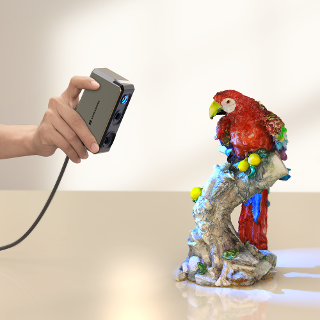
A conventional photograph records a particular view. Written measurements can document selected dimensions. A three-dimensional capture adds a different kind of reference: a digital representation of visible geometry that can be rotated, examined from multiple angles, and measured later. Depending on the capture method and the object, teams may also preserve color or surface appearance as part of the digital asset.
Museums and research teams may use these models for cataloging, condition review, exhibition planning, education, and conservation work. A scan does not replace an expert’s assessment of material condition or historical significance. It gives specialists another record to use alongside photographs, written notes, provenance, and conservation documentation.
Plan the Capture Around the Object
The first step is to define what the record must support. A study focused on overall form may not need the same level of detail as a project documenting fine carving, tool marks, or small areas of damage. Teams should decide whether the priority is shape, color, surface condition, scale, or a combination of these needs before setting up equipment.
Review handling and access requirements
Before scanning begins, confirm who may handle the object, whether it can be moved, and what supports are permitted. Fragile, large, or irregular artifacts may need a conservator or collections specialist present. If the object must remain in place, the capture plan should account for the available viewpoints and any areas that cannot be safely reached.
Control the environment
Lighting, vibration, background clutter, and reflective or transparent surfaces can affect optical capture. A stable table, consistent room lighting, and a simple background help reduce avoidable variation. If surface preparation is not appropriate for an artifact, the team should choose a method that respects the object rather than applying coatings or materials that could alter it.
Capture enough viewpoints
One pass rarely records every surface. Plan overlapping views that cover the top, sides, recesses, and undersides where access is allowed. A small checklist can help the operator keep track of completed areas and identify gaps before the equipment is packed away. For a site or large installation, the same principle applies at a larger scale: map the area, mark planned stations, and check that neighboring captures can be aligned.
A Repeatable Workflow for Artifact Digitization
A repeatable process makes it easier to review the resulting model and understand how it was created. The sequence below can be adapted to an institution’s handling policy and documentation standards.
| Workflow stage | What to do | Why it matters |
| Preparation | Confirm object ID, handling rules, and capture purpose | Keeps the session safe and focused |
| Capture | Stabilize the object and record overlapping viewpoints | Reduces gaps and supports alignment |
| Processing | Preserve raw files; document alignment and cleanup | Maintains a transparent record |
| Archiving | Store model, textures, notes, and metadata together | Makes the asset easier to find and reuse |
The notes around the capture matter as much as the model itself. Record the date, operator, equipment and software used, object identifier, capture conditions, file format, and any known limitations. These details help future users interpret the model correctly and distinguish changes in the object from changes in the capture process.
From Raw Capture to a Usable Archive
Raw scan data often needs alignment, cleanup, and conversion before it is ready for regular use. During processing, retain an untouched copy of the original capture and document any edits made to the working model. Avoid removing areas simply because they are difficult to interpret; a missing region can be important evidence, and an edited surface should not be presented as if it were a direct capture.
A preservation program also needs a storage plan. Use clear file names tied to the object record, keep more than one secure copy, and consider how large files will be migrated over time. Separate source data, processed meshes, texture files, and lightweight viewing copies so that each can be retrieved for the right purpose.
Choosing Equipment for Different Collections
Collections vary widely in scale, material, and access. A small carved object, a mechanical artifact, and a room interior call for different working distances and capture methods. A broad 3D scanner collection can help teams compare devices by intended object size and use case before deciding which equipment is appropriate. For example, the product range listed by 3DMakerpro includes scanners presented for applications such as arts and heritage, education, reverse engineering, and 3D printing; institutions should still assess each model against their own conservation requirements.
For very large spaces, survey equipment and professional documentation workflows may be more appropriate than a handheld object scanner. For small artifacts, portability and access to multiple viewing angles may be more important. In either case, a specification should be treated as one input to selection, not as a guarantee that every material or geometry will scan successfully.
Ethics, Access, and Long-Term Stewardship
A digital model can widen access, but the original object remains the authority for questions that require direct material examination. Make clear which areas were not captured, which details were edited, and whether color is a visual approximation. This distinction is especially important when models are used in research, teaching, conservation planning, or public interpretation.
Consider permissions and access controls before publishing high-resolution records. Some collections have cultural, legal, or community protocols that govern who may view or reproduce particular objects. A preservation team can maintain a secure archival master while offering a lighter public version when that better fits the collection’s policies.
Long-term care also requires more than keeping one model in a folder. Store files in formats the institution can manage, keep redundant copies, and schedule periodic checks so that files remain readable. Record the relationship between the digital asset and the physical collection record so future staff can understand its source and permitted uses.
Conclusion
Three-dimensional capture can strengthen cultural heritage documentation by creating reusable digital references for research, education, and planning. Reliable records start with a clear purpose, careful handling, complete coverage, preserved source data, and notes on how the model was made.
A model remains useful when its source files, edits, and limitations are documented. That record lets future researchers revisit the digital copy while preserving the physical object as the reference for direct examination.