
What Type of Rider Actually Benefits Most From an Electric Motorcycle?
Choosing a motorcycle is rarely just about specifications. The better choice depends on how, where, and how often a rider actually uses it. This is especially true when comparing electric motorcycles with conventional options. A rider who travels a predictable distance every day may have a very different experience from someone who regularly takes long highway trips or rides far from charging infrastructure.
That is why the more useful question is not whether electric motorcycles are simply “better.” It is whether their characteristics match a particular rider’s routine. Daily distance, charging access, terrain, maintenance preferences, and expectations all influence the answer. Understanding those factors can help riders determine whether electric power genuinely suits their lifestyle rather than relying on broad claims about the technology.
The Best Fit Depends More on Riding Habits Than Experience
Riding experience alone does not determine whether someone is a good candidate for an electric motorcycle. An experienced motorcyclist who frequently travels long distances may face different practical considerations than a newer rider who mainly travels around town. The technology can work well for either person, but the circumstances surrounding their riding matter more.
Consider two riders with completely different routines. One may spend most weekends touring long distances, while another travels a familiar route to work five days a week. The second rider may have a more convenient use case if the daily distance is manageable and charging is readily available at home. In other words, suitability is less about being a beginner or an experienced rider and more about whether the motorcycle’s capabilities align with everyday needs.
Daily Commuters May Get the Most Practical Benefit
Daily commuters are among the riders who may find electric motorcycles particularly practical. A repeated route makes it easier to estimate energy needs, plan charging, and understand how much range is required. Someone traveling a similar distance each day can establish a predictable routine instead of constantly wondering where the next charging opportunity will be.
Stop-and-go urban traffic can also create a different riding experience from long highway journeys. Frequent acceleration and deceleration, combined with shorter average trips, may suit the characteristics of an electric motorcycle particularly well. Home charging can further simplify the routine because the motorcycle can potentially be charged during periods when it is not being used.
However, commuters still need to consider their actual distance, charging location, weather, traffic, and the motorcycle’s real-world range. A long commute with no convenient charging option may not be nearly as straightforward as a short commute from a home with reliable overnight charging.
Urban Riders Can Have a Different Advantage
Urban and suburban riders often operate within relatively predictable environments. Their journeys may involve shorter distances, frequent stops, congested roads, and regular opportunities to return home between trips. These conditions can make electric power an appealing option for certain riders.
The absence of frequent refueling stops can also be convenient when charging is incorporated into an existing routine. A rider who parks at home overnight may not need to make a separate trip simply to replenish energy. Quiet operation can be another consideration for people who spend much of their time riding through residential areas.
The situation changes when most riding happens on highways or over long distances. Higher speeds, longer continuous travel, limited charging opportunities, and the need for more frequent route planning can place different demands on an electric motorcycle. Urban suitability therefore does not automatically translate into long-distance suitability.
Charging Access Can Matter More Than Battery Size
Battery capacity is an important specification, but it does not tell the entire story. For many riders, where and when they can charge may be more important than having the largest possible battery. A motorcycle with sufficient practical range and convenient charging can be easier to live with than one with greater capacity but limited access to electricity.
Home charging is particularly useful because it can become part of an existing daily routine. Workplace charging can provide another option for commuters, while public charging may be more important for riders who regularly travel beyond their normal routes. Apartment residents, meanwhile, may need to consider whether they have a practical place to charge before choosing an electric motorcycle.
The key question is therefore not simply, “How large is the battery?” It is, “Can I reliably recharge it when I need to?” A rider with a predictable charging routine may have fewer practical concerns than someone who depends heavily on uncertain charging opportunities.
Different Rider Types, Different Levels of Suitability
Electric motorcycles can appeal to several types of riders, but the reasons are not identical. Their suitability depends on the details of each person’s routine.
- Daily commuters: Predictable routes can make charging and range easier to manage.
- Urban riders: Shorter trips and frequent stops may align well with electric riding.
- Short-distance recreational riders: Riders who rarely travel far may place less emphasis on maximum range.
- Low-maintenance-focused riders: Some may appreciate having fewer conventional drivetrain components requiring routine attention.
- Technology-oriented riders: People comfortable with battery systems and digital controls may find the transition more natural.
- Cost-conscious riders: They may be interested in comparing energy, maintenance, and ownership costs rather than focusing only on purchase price.
None of these categories guarantees a good fit. Actual range, charging access, performance requirements, terrain, and local conditions still need to be considered before making a decision.
When an Electric Motorcycle May Not Be the Right Choice
An electric motorcycle is not automatically the most practical choice for every rider. Someone who frequently travels very long distances may find charging requirements more restrictive than a rider whose journeys are mostly local. The same can apply to people who regularly travel through areas where charging infrastructure is limited.
Riders without dependable access to charging should also think carefully about their routine. Apartment living, shared parking, or a lack of suitable electrical access can introduce complications that may not exist for someone with a private garage. Similarly, riders with specific performance requirements should evaluate whether the models available to them can realistically meet those needs.
Long-distance touring is another area where expectations matter. A rider who enjoys extended journeys with minimal interruptions may prioritize characteristics that are different from those valued by an urban commuter. This does not make electric motorcycles unsuitable; it simply means the rider’s priorities need to match what the technology can realistically provide.
What Changes When You Ride Off Road?
Terrain changes the equation considerably. Riding away from paved roads can place different demands on a motorcycle because uneven surfaces, inclines, loose ground, and repeated changes in speed can affect energy consumption and handling. Riders also need to consider suspension, ground clearance, tires, weight, and overall durability.
For someone considering an off-road electric bike, battery management becomes particularly important. A remote trail may offer no convenient opportunity to recharge, so the rider needs to understand the expected distance and conditions rather than relying only on a headline range figure. Terrain, riding style, rider weight, and weather can all influence actual energy use.
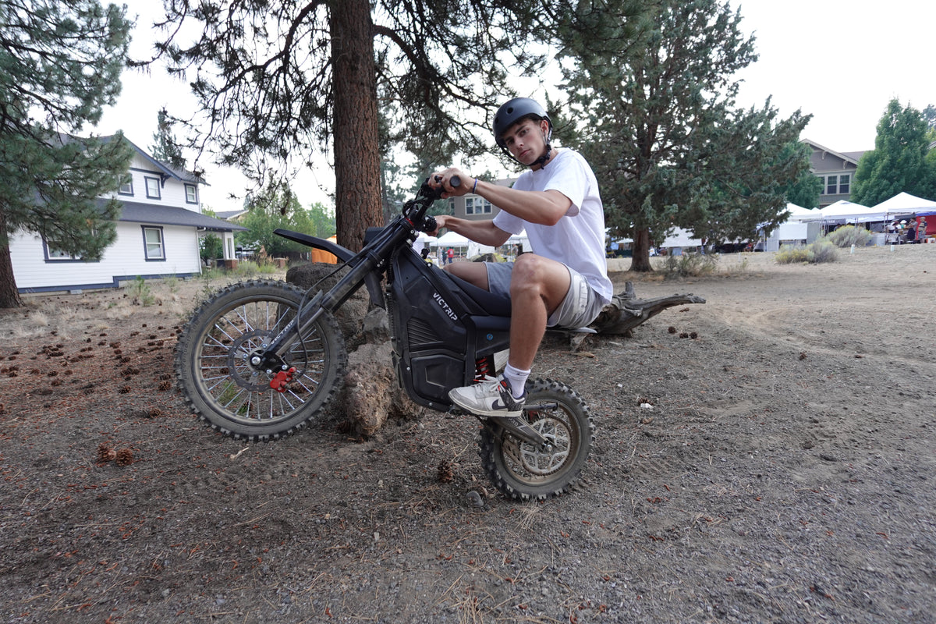
Off-road riders should therefore evaluate the entire package rather than focusing solely on motor output or battery capacity. A motorcycle that works well for paved commuting may not necessarily provide the suspension, clearance, handling characteristics, or range management needed for regular trail riding.
A Simple Way to Decide Whether You’re a Good Fit
Before choosing an electric motorcycle, it helps to look at your normal riding pattern rather than starting with specifications. A few practical questions can reveal whether the technology fits your circumstances:
- How far do you normally ride in a day?
- Where would you charge the motorcycle?
- How often do you make long-distance trips?
- What type of roads or terrain do you normally use?
- How important is low routine maintenance to you?
- Do you regularly need sustained highway performance?
- What would you do if charging were temporarily unavailable?
The answers provide a more useful starting point than simply comparing battery sizes or motor outputs. A motorcycle should fit the way you actually ride, not an imagined version of your lifestyle.
So, Who Benefits Most From an Electric Motorcycle?
The strongest candidates are generally riders with predictable daily travel, convenient charging access, and expectations that match the practical range and performance of the motorcycle they choose. Urban commuters, short-distance riders, and people who can easily charge at home may find the transition particularly straightforward.
By contrast, riders who regularly travel very long distances, spend significant time in remote areas, or lack dependable charging access may face more limitations. That does not mean they cannot use electric motorcycles, but they may need to plan more carefully around range and charging.
Ultimately, the best match is determined by the relationship between the motorcycle and the rider’s routine.
Conclusion
The rider who benefits most from an electric motorcycle is not necessarily the most experienced, the youngest, or the most enthusiastic about new technology. The strongest fit is usually someone whose everyday riding pattern aligns with the strengths and limitations of electric power.
Predictable distances, convenient charging, suitable terrain, and realistic performance expectations can make a significant difference. Riders who understand those factors before choosing a motorcycle are more likely to find a setup that works consistently rather than discovering limitations after purchase.
For those researching different electric riding options, VICTRIP EBikes can be one resource to explore while comparing choices based on individual riding needs.
FAQs.
1. Who benefits most from an electric motorcycle?
Riders with predictable daily routes, convenient charging access, and short-to-medium travel needs are often among the best candidates. Urban commuters and riders who can charge at home may find electric motorcycles particularly practical.
2. Are electric motorcycles good for daily commuting?
They can be well suited to daily commuting when the rider’s typical distance fits the motorcycle’s practical range and reliable charging is available. Predictable routes also make it easier to establish a consistent charging routine.
3. How important is charging access when choosing an electric motorcycle?
Charging access can be one of the most important factors. A rider with convenient home or workplace charging may find an electric motorcycle much easier to use than someone who depends entirely on limited public charging options.
4. Are electric motorcycles suitable for long-distance riding?
They can be, but long-distance riders need to consider practical range, charging infrastructure, charging time, route planning, and riding conditions. Riders who frequently travel long distances may have different requirements from urban commuters.
5. Can an electric motorcycle be used for off-road riding?
Some electric motorcycles are designed or equipped for off-road use, but suitability depends on factors such as suspension, ground clearance, tires, weight, battery capacity, torque delivery, and expected riding terrain.