
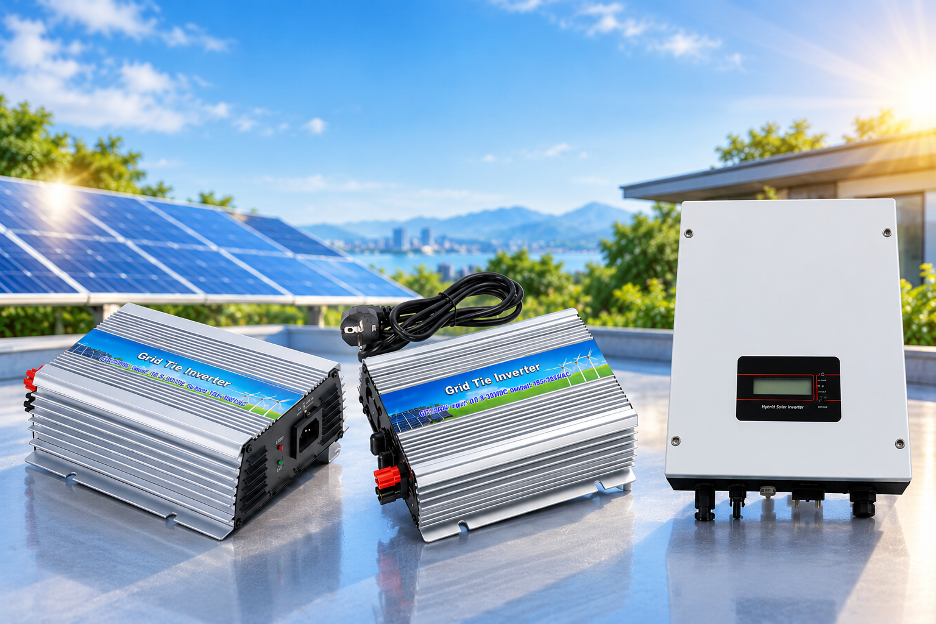
How to Choose the Right On-grid Inverter for Your Solar System
Solar power systems need an on‑grid inverter to turn the direct current made by solar panels into alternating current. This lets homes and businesses use electricity and send extra power back to the utility grid when allowed. The on‑grid inverter also keeps the system in sync with the grid so everything works safely and reliably.
Picking the on‑grid inverter is not just about looking at its rated output power. You should also think about how the on‑grid inverter fits your solar panels how efficient the conversion is, what safety features it has whether you can monitor it and the conditions where you will install it. Local utility. How much electricity you expect the system to make are also important, for the final decision.
What Is an On-grid Inverter?
An on‑grid inverter takes current from solar panels and changes it into alternating current that matches the voltage and frequency that the utility grid needs. The device synchronizes the power it produces with the grid’s electricity and connects it to the site’s equipment. Depending on the design, it delivers the power generated by solar panels to the appliances at the location and the extra electricity surpluses to the utility grid.
These On-grid inverters are used in residential, commercial, and industrial buildings to supply them with renewable energy. Typically, they do not require a battery bank due to the ability to draw power from the grid. Nonetheless, the presence of a functional connection and the compliance with the regulations are obligatory for the normal operation. Normally an on-grid inverter cannot supply power during a utility blackout because of -islanding protection.
How Does an On-Grid Inverter Work?
Solar panels produce current from sunlight and the on‑grid inverter converts it into alternating current, for use in the building and connection to the utility grid. The on‑grid inverter adjusts its operation based on the electricity supplied by the panels. Additionally the on‑grid inverter synchronizes with the utility grid to use the voltage and frequency values and ensures that the connection meets the regulations.
The on grid inverter uses maximum power point tracking (MPPT) to adjust the panels operating point and capture solar power. The on‑grid inverter uses maximum power point tracking (MPPT) to adjust the panels operating point and capture solar power.
Anti‑islanding protection shuts the on‑grid inverter down during a grid outage so the on‑grid inverter does not feed power into lines that utility workers may be repairing. Anti‑islanding protection shuts the on‑grid inverter down during a grid outage so the on‑grid inverter does not feed power into lines that utility workers may be repairing.
Key Specifications to Check Before Buying
When you are about to buy an inverter you must compare the on‑grid inverter specifications, with the solar panel array the expected electricity use and the local grid requirements. The on‑grid inverter choice must give enough output stay within the solar panel electrical limits and allow safe grid connection. Looking at these factors helps buyers avoid compatibility problems and unnecessary performance losses.
The main factors to consider are rated output power, solar panel compatibility, conversion efficiency, safety features and monitoring options. Buyers should also look at the installation environment, warranty terms and local utility requirements.
Rated Output Power
Find that rated output power means the AC power that an on-grid inverter can keep delivering all the time. And always try to match that rated output power to the DC capacity of the array not just pick a number based on wattage.
- Check the DC-to-AC ratio. This is the array’s DC capacity divided by the inverter’s AC rating. A ratio that is around 1.1 to 1.3 works for homes and businesses. For example a 6 kW system paired with a 5 kW on-grid inverter creates a ratio of 1.2. Some models can handle ratios so check the maximum ratio, in the datasheet.
- Watch for clipping. If the solar array is much bigger than the On-grid inverter the inverter will limit its output during midday. The extra energy the panels make gets wasted.
- Pick the right phase. Single-phase inverters work well for homes. Three-phase inverters are better, for homes, shops and factories.
- Check export limits. Some utilities cap the capacity a site may connect or export, so confirm this before choosing a size.
Conversion Efficiency
Efficiency tells you how much of the DC power turns into AC power. Even a small difference can make an impact over twenty years of use.
- The maximum efficiency of on-grid inverters usually ranges from 98% to 99%. That number isn’t the whole story.
- Weighted efficiency. Like the Euro or CEC rating. Gives a realistic picture. It accounts for conditions and is the better number to compare. When you look for models make sure they have 97 percent or higher.
- The efficiency curve is a way to see how well the inverter performs across loads. A good inverter stays efficient at high outputs not just at its peak.
- Temperature derating is important too. Some inverters reduce output when it gets too hot. This matters a lot in places that’re often warm or hot.
Safety Features and Grid Compliance
An on‑grid inverter has to follow grid rules. Grid rules keep people and equipment safe. Asking the seller for the certifications. Make sure those certifications are valid for your area.
- Anti-islanding protection: Anti‑islanding protection is a must. Anti‑islanding protection stops the inverter, from sending power to the grid during a blackout.
- Grid protections: Check for over voltage protection under voltage protection and frequency protection. Also look for DC and AC surge protection.
- Fault protection: Ground fault detection and residual current monitoring help reduce fire and shock risks. Arc fault protection (AFCI) is an extra.
- Certifications: Certifications are essential in any system. Certifications commonly include IEC 62109-1 and IEC 62109-2 for safety IEC 62116 for islanding and IEC 61727. Certifications also cover standards. Regional standards include UL 1741 and IEEE 1547 for the United States, EN 50549 and VDE-AR-N 4105, for Europe and the utility’s own approval list.
Cooling and Environmental Protection
Heat can hurt performance. Shorten the lifespan of equipment. The place where you install it is just as important as the specs.
- IP rating: IP65 is the minimum for outdoor installation and it protects against dust and water jets. IP66 gives protection in dusty or rainy areas. It can assure you that IP66 keeps dust and water out of the device.
- Operating temperature range: check the range and the temperature at which output starts to drop. You look at the operating temperature range and find the point where output begins to fall.
- Cooling type: Natural convection models are silent. Have no fan to fail. seen that fan cooled models are able to handle power. Fan cooled models need clean airflow and occasional maintenance.
- Placement: choose a ventilated spot. Keep the manufacturer’s clearance distances.
Warranty and Service
The warranty shows the manufacturers confidence. Has an effect on overall costs, over time.
- Length: Most string inverters come with a 5-year warranty and many companies offer paid choices to extend it to 10, 15, 20 or 25 years.
- What it covers: check that it includes replacement parts, labor and shipping costs.
- Local support: make sure the brand has service or an authorized installer because slow repairs mean less solar power being produced.
- Conditions: read the details carefully to understand the installation rules that might cancel the coverage.
Input Voltage and Current
The On-grid inverter’s DC input range must suit the panels. Check the maximum DC input voltage, the MPPT voltage range, and the maximum input current. Panel voltage rises in cold weather, so the array’s highest possible voltage must stay below the inverter’s limit.
Maximum Power Point Tracking
MPPT adjusts the panels’ operating point to capture the most power. A single MPPT is enough for one roof direction. Two or more separate MPPTs work well for arrays placed on sides of a roof or for systems that have parts shaded.
How to Size an On-grid Inverter
The appropriate on-grid inverter capacity depends on the solar array size, system design, and expected electricity demand. The buyer should review the panels’ power and the inverter’s allowable range to ensure that the system will be able to supply the load. The on-grid inverter capacity must match the solar array size and the system’s expected electricity demand.
Check the DC input power and current limits in the datasheet. Make sure the solar array stays within those limits. The DC-to-AC ratio of the on-grid inverter shows how the array’s DC capacity compares to the inverter’s rated AC output. This ratio depends on the system design. A higher ratio does not always mean performance. If the solar array is much larger than the inverter. Meaning a DC-, to-AC ratio. The inverter will clip output during peak sunlight. If the On-grid inverter is much larger than the array, it runs at low load and can be slightly less efficient. .
The ability to connect the strings influences the size, and the voltage of the system should be within the limits of the inverter. The current also has to be reviewed since each On-grid inverter is limited in its capacity. The temperature and the number of MPPTs also have to be taken into consideration.
Monitoring and Maintenance Requirements
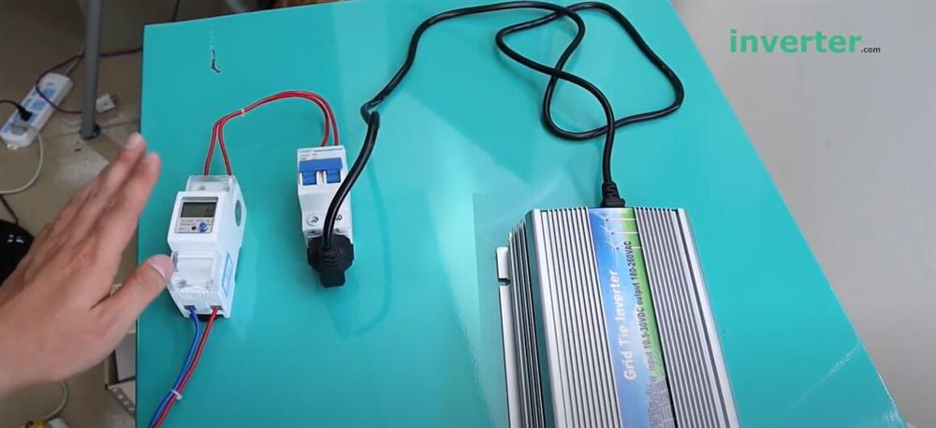
The ability to monitor the equipment is essential due to the need to ensure that the system operates correctly. Depending on the design of the On-grid inverter, the monitoring system can be located in a local network, an application, or on a separate screen. Some configurations require an additional device to be used and others can be controlled with integrated display or the web platform.
Prior to the purchase it is vital to review the monitoring system and the connection to the local network or the Internet. The buyer should be aware of additional equipment that may be necessary on the operation. Moreover, it is essential to ensure that the monitoring data can be viewed remotely and that the system allows for the necessary functions.
The maintenance of the On-grid inverter typically involves inspecting the equipment, ensuring that the connection to the system is stable, and making sure that the On-grid inverter is not located in an area that restricts the flow of air. Following the guidelines of the manufacturer is recommended to ensure that the equipment does not get damaged. In addition, the electrical housing is not to be opened by non-professionals.
When equipment needs servicing equipment needs a specialist to do the work. If the alarm goes off frequently or unit keeps turning itself off or overheating professional should be called. Based on its design, the On-grid inverter can be programmed to modify the operations according to the temperature and voltage. Thus a qualified technician must examine the equipment. Must find the cause of the malfunction.
How On-Grid Inverters Support Daily Life and Technology
An on‑grid inverter can be used in homes and in offices to gather electricity from panels. Solar panels in a house can give power for lights, refrigerators, computers and other devices while the sun is shining. Solar panels need the sun to work. In buildings, offices and stores solar panels can give electricity to machines and equipment. The generated power depends on sunlight and the inverter’s capacity.
Modern on-grid inverters can be integrated with software to monitor the inverters’ work and collect data through applications. It is possible to analyze the information in real-time and receive notifications about possible issues. The user can see the collected electricity and system’s performance on a screen, dashboard on the phone, or a separate monitor. Solar energy becomes more efficient since the user can observe the inverters’ work and detect possible problems.
The on-grid inverter functions only when the main circuit has power. If the power grid fails for any reason, the On-grid inverter stops working immediately. An On‑grid inverter that has an On‑grid function will not give power when a blackout happens. It is best to talk with a firm to make sure that the right battery and On‑grid inverter are chosen for a home or a commercial building. Homes, offices, shops, schools, factories and farms all use On‑grid inverters to lower electricity bills. Any extra power can be sent back, to the grid where that is allowed.
Common Mistakes to Avoid When Selecting an On-Grid Inverter
Some buyers only look at the rated output power of a solar inverter and miss other important details. When comparing On‑grid models check the input voltage, current limits MPPT setup, safety features and grid compatibility. These factors help determine whether the inverter suits the solar panels and local utility requirements. Due to the possibility of using the battery to store the extra electricity, some buyers believe that all On-grid Inverters can work with the battery. Standard On-grid inverters only use the grid. The hybrid inverter is made for setups that have batteries. When you buy a product you must look at the specifications, requirements and guidelines.
When deciding how big the inverter should be the buyer must think about more, than the output wattage. The inverter size depends on things, not only the output wattage. The specifications should be compared in accordance with the local utility and the characteristics of the solar panels. Another common mistake is failing to consider the requirements of the application. The panels have to be connected in series or parallel in accordance with the capabilities of the inverter. Therefore, the equipment has to be selected in accordance with the intended use.
Making a Practical Buying Decision
The decision to purchase an inverter should be based on the intended use of the equipment, the requirements of the application, the capabilities of the panels, and the location of the inverter. Buyers need to look at the inverters details the ways it can track performance the warranty rules and what is needed for setting it up before they decide to buy. Talking to a trained expert can make sure the, on-grid inverter works well with the solar panels and the electricity coming from the local power grid.
The buyer also needs to check the monitoring system, how it connects to the power network and what kind of support services are there. It is very important to read the warranty terms and focus on what the agreement says. The rules and conditions should not be. The agreement must be studied thoroughly.
Frequently Asked Questions
What does an On-grid Inverter do?
An On-grid Inverter is a device that converts direct current into alternating current with the use of the voltage and frequency of the local grid. The equipment allows for the connection to the utility grid and enables the export of the extra electricity generated by the solar panels.
Can an On-grid Inverter work without batteries?
An On-grid Inverter typically does not require batteries for the operation since it is able to utilize the current from the grid. However, special inverters are needed for the applications with battery storage.
Does an On-grid Inverter work during a power outage?
The equipment typically stops functioning when the grid goes through a blackout due to the anti- islanding protection. In order to obtain the necessary power during an emergency, a different On-grid inverter has to be utilized.
How to choose the On-grid inverter capacity?
The capacity of the inverter has to be determined by the needs of the equipment rather than a random selection. The buyer should compare the specifications of the inverter with the capabilities of the panels.
Why is MPPT important in an on-grid inverter?
The ability to utilize maximum power point allows for improving the yield of the panels. The effectiveness of the feature depends on the design and the requirements of the application.
Conclusion
The main criterion in selecting an on-grid inverter is the solar system’s needs. It is important to consider the on-grid inverter’s power rating, input voltage, MPPT (Maximum Power Point Tracking), efficiency, and compatibility with the grid. Moreover, it is essential to pay attention to the inverter’s safety, monitoring, and installation parameters. In addition, it is important to study the manufacturer’s specifications and grid requirements to select the appropriate equipment. A specialist can determine whether the selected equipment is suitable for the solar panels and the electrical characteristics of the residence and the area where the system will be installed.