Diablo 4 Season 13 Players Are Turning to Boosting Services as Lord of Hatred Launches
Diablo 4: Lord of Hatred went live on April 28, 2026 — the second major expansion for Blizzard’s action RPG and one of the largest content drops in the franchise’s history. Two new classes, a brand-new continent, six new endgame systems, and a full skill tree rework for all eight existing classes arrived simultaneously. Season 13 launched alongside the expansion, resetting the seasonal progression ladder and introducing Echoing Hatred — a wave survival mode that scales infinitely with your build’s ceiling.
The sheer volume of new systems has created a familiar pattern in the Diablo 4 community: a surge in demand for boosting and carry services in the first two weeks of a major content drop. Here is why that is happening, what players are specifically purchasing, and what the Lord of Hatred launch means for the carry services market in 2026.
What Lord of Hatred Actually Adds: The Full Picture
Lord of Hatred was announced at The Game Awards 2025 on December 11, 2025 and represents a more ambitious expansion than Vessel of Hatred in scope. The core additions:
- Two new classes: Paladin and Warlock. The Paladin — a returning class from the Diablo franchise — wields holy light with Blessed Hammer, Condemn, and Aura abilities, culminating in an Angelic Form ultimate. The Warlock is entirely new to the series: a demon binder with two distinct archetypes — Legion (swarm summoning) and Vanguard (front-line hellfire melee). Pre-order players had early Paladin access; the Warlock unlocks at expansion launch for everyone.
- New region: The Skovos Isles. The ancient birthplace of the first civilization — and the former home of Lilith and Inarius — becomes explorable for the first time in the franchise’s history. Geography ranges from volcanic coasts to dense forests and waterlogged ruins, with Temis as the expansion’s endgame hub city.
- Six new or reworked endgame systems. The Horadric Cube, War Plans, Echoing Hatred, the Talisman, a native Loot Filter, and full skill tree reworks for all eight classes. The Standard Edition starts at $39.99 and includes Vessel of Hatred at no additional cost.
“Lord of Hatred is the biggest Diablo 4 content drop since launch and it effectively reshapes how endgame works from the ground up.” — KingBoost analysis, April 2026
The New Systems: Why They Drive Boosting Demand
Each new system in Lord of Hatred creates a specific demand category for carry and D4 boost services. The table below maps the systems to their practical service implications:
| New system | What it is | Why boost services help |
| Horadric Cube | 4×3 crafting grid in Temis: upgrade rarity, swap affixes, amalgamate dupes, convert items to Uniques | Optimal cube use requires deep item knowledge; carry teams advise on every transmutation decision |
| War Plans | Customizable endgame progression map — choose your challenges and difficulty scaling across Torment 5–12 | Torment 12 is a significant skill wall; carries unlock high-tier War Plans fast |
| Echoing Hatred | Wave survival arena: no exit, unlimited difficulty scaling, loot scales with how far you go | Build optimization is everything; carry teams help configure the right build for deep clears |
| Talisman | New gear slot with set bonuses — first set bonuses in D4’s history | Correct Talisman pairing requires meta knowledge that changes in week 1 |
| Loot Filter | First native D4 loot filter — hides irrelevant drops, highlights target affixes | Carry teams help configure filter for your specific class and build goals |
| Skill Tree reworks | All 8 classes get new skill variants — effectively new rotations for every existing character | Relearning optimal rotations takes weeks; coaching sessions compress that to hours |
The most impactful new systems for the boosting market are the Horadric Cube and the Talisman. The Cube — a 4×3 transmutation grid for upgrading, modifying, and converting items — requires both material investment and strategic decision-making about which items to process. First-week players making suboptimal Cube decisions are effectively destroying progression resources. Carry teams who have studied the Cube mechanics extensively can guide customers through every transmutation in real time.
The Talisman introduces set bonuses to Diablo 4 for the first time in the game’s history. Set bonus combinations interact differently with each class’s kit, and optimal Talisman pairings for Season 13 will not be fully mapped until the community has had two to three weeks to test. Players who want to be competitive on Day 1 and Day 7 are turning to carry services staffed by players who had beta and PTR access.
The Eight Classes in Season 13: Boost Value by Class
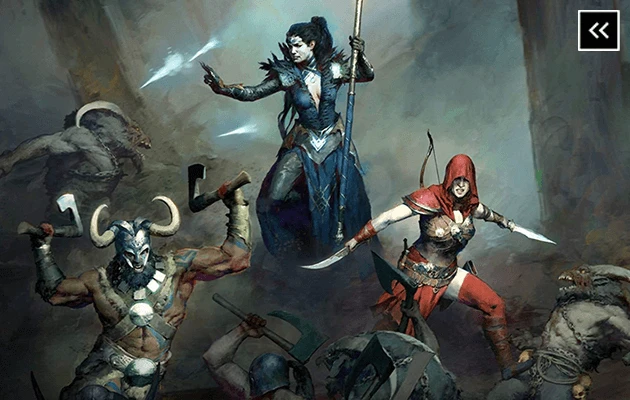
One of the most significant structural changes in Lord of Hatred is the skill tree rework across all eight classes. Every existing class has new skill variants that change optimal rotations — effectively, every Diablo 4 player has to relearn their character. Here is where the boost demand concentrates by class:
| Class | Playstyle | Strength | Learning curve | Boost value |
| Paladin (NEW) | Holy melee + aura buffs | Versatile; Angelic Form ult | Medium | High — meta unknown week 1 |
| Warlock (NEW) | Demon summoner / hellfire | Legion (swarm) or Vanguard (melee) | High | High — most complex new class |
| Barbarian | Berserking melee DPS | Highest single-target burst | Medium | Medium |
| Sorcerer | Elemental AoE | Best clear speed on new zones | Low | Low — rework minor |
| Necromancer | Minion / bone spells | Echoing Hatred depth clears | Medium | Medium |
| Druid | Nature / shapeshifting | Best sustain tank option | High | High — skill tree rework heavy |
| Rogue | Shadow + poison burst | Fastest Skovos zone traversal | Medium | Medium |
| Spiritborn | Spirit guardian mechanics | Highest ceiling with Talisman sets | High | High — Talisman synergy complex |
The highest boost demand in Season 13’s first two weeks will almost certainly be concentrated in the two new classes — Paladin and Warlock — because no established build guides exist at launch. Players who pick up these classes on Day 1 are building their characters with incomplete information. Carry teams who have been playing the expansion since beta can advise on ability priority, Talisman pairing, and Horadric Cube strategy with certainty that solo players simply do not have access to yet.
Season 13 Timing: Why the First Two Weeks Are the Highest-Value Window
Diablo 4 operates on a three-month seasonal cycle. Season 13 began April 28, alongside the Lord of Hatred launch, and will run through approximately late July 2026. This structure creates a specific time pressure that plays out identically every season:
- Week 1: The highest information asymmetry. Players with carry teams or coaching access have significantly better outcomes than solo players discovering systems independently. Seasonal cosmetics and Battle Pass rewards are all accessible, but time invested in week 1 compounds across the full season.
- Weeks 2–4: Meta stabilization. Build guides from Maxroll, Icy Veins, and community streamers begin to converge. The advantage of early-access knowledge starts to flatten. This is also the window where War Plans difficulty scaling becomes the primary progression bottleneck — Torment 8–12 access requires gear that takes multiple weeks to acquire solo.
- Weeks 5–10: Seasonal rewards become time-limited. Battle Pass levels, exclusive cosmetics, and seasonal achievements all have end dates. Players who fall behind in weeks 3–4 turn to farm services and powerleveling to catch up before the season closes.
- Final two weeks: Rush demand spike. Players who delayed engagement with Season 13 content due to other commitments purchase powerleveling and carry services to complete the season journey and collect time-limited rewards before reset.
For carry services, weeks 1 and 2 and the final two weeks of a season consistently generate the highest order volume. Lord of Hatred’s simultaneous launch with Season 13 — and the addition of six entirely new systems — makes this particular Week 1 the most information-asymmetric launch the game has had since its 2023 release.
What Services Players Are Actually Buying Right Now
Based on the pattern from previous D4 season launches and the specific features of Lord of Hatred, the highest-demand services in the first two weeks of Season 13 are:
- Paladin and Warlock powerleveling. Both new classes start at level 1 even for veteran players. Getting from level 1 to endgame-ready ilvl for the new Torment tier system takes 15–25 hours solo, or 3–6 hours with a leveling carry. The first week of a new class launch is when this service is most competitively priced.
- Horadric Cube guidance sessions. These are effectively coaching sessions focused on Cube transmutation strategy — which items to process, in what order, for your specific build and class. This is a new service category that did not exist before Lord of Hatred, and demand is growing rapidly as players discover how costly poor Cube decisions are.
- Echoing Hatred depth carries. The wave survival mode scales with build quality, not just character level. Players whose builds are not optimized for sustained damage output hit a wall around wave 20–30. Carry sessions with optimized builds demonstrate the correct build path and get players the loot drops that the deeper waves provide exclusively.
- Torment 8–12 farm runs. The Lord of Hatred expansion extends the Torment difficulty system significantly. Torment 12 requires a meaningfully higher gear floor than previous seasons, and farm runs at the appropriate tier are the fastest way to accumulate the materials the Horadric Cube requires.
- Seasonal journey and Battle Pass completion. For players who want the Lord of Hatred seasonal cosmetics but cannot invest the full hours required to complete the journey solo, targeted assist runs cover specific chapters or objectives within the player’s active playtime.
Where to Find Diablo 4 Season 13 Services
The carry services market for Diablo 4 has matured significantly since Season 1. Multiple established platforms offer Season 13 services with self-play options, verified boosters, and delivery guarantees. The key criteria for choosing a provider for Lord of Hatred content specifically are: beta and PTR access (for Paladin, Warlock, and Horadric Cube expertise), coverage of the new Torment 10–12 tier (not all services have geared up for the expanded difficulty), and active support during the carry session itself.
Platforms like xboosty.com cover the full Season 13 service range — new class powerleveling, Horadric Cube guidance, Echoing Hatred runs, Torment farm sessions, and seasonal journey assistance. For players entering Lord of Hatred without the hours to navigate six new systems in a three-month window, the first two weeks of a season have always been the highest-value window for using carry services — and Season 13’s simultaneous expansion launch makes that window more significant than any previous season.
The Bottom Line for Season 13
Lord of Hatred is the most ambitious Diablo 4 release since the game launched in 2023. Two new classes, a new continent, six overhauled systems, and skill tree reworks across all eight existing classes have reset the knowledge baseline for every player simultaneously — veteran and newcomer alike. That reset creates the largest information asymmetry window the game has ever seen at a season launch, and it is that window where carry services deliver their highest practical value.
For players who want to get Paladin or Warlock builds right from week 1, clear Echoing Hatred efficiently, and use the Horadric Cube without wasting materials, the first two weeks of Season 13 are the time to invest in professional assistance. The season runs until late July. Everything that happens in weeks 1 and 2 compounds across that entire period.