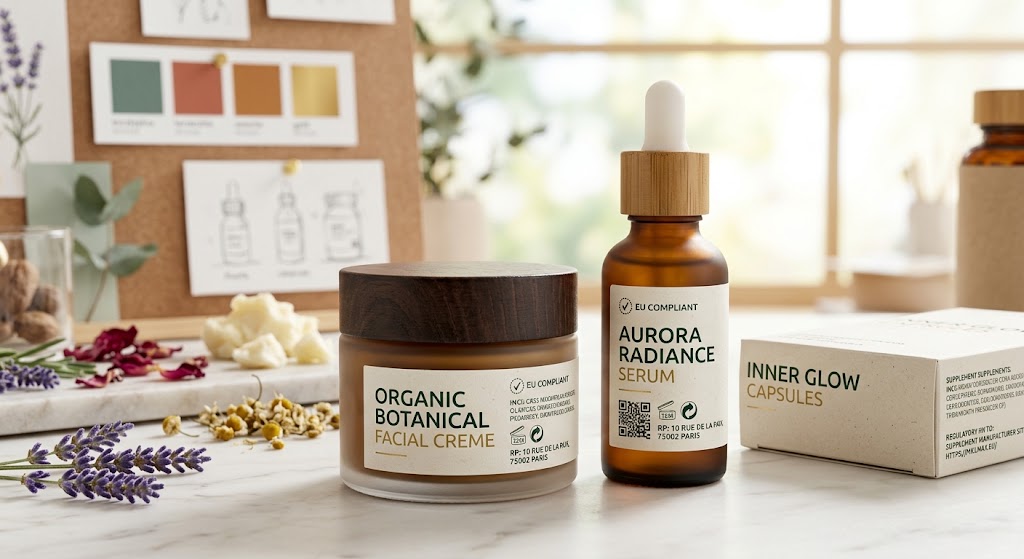
How to Create Your Own European Cosmetic Brand
Launching a cosmetic brand in Europe offers access to one of the world’s largest and most lucrative beauty markets. To succeed, you must formulate high-quality products, strictly comply with the EU Cosmetic Regulation (EC No 1223/2009), secure a Responsible Person, and build a distinctive brand identity.
Starting a beauty label isn’t just about picking pretty packaging and creating a eye-catching Instagram feed. The European market demands strict compliance, safety testing, and methodical planning long before your first bottle hits store shelves.
Here is everything you need to know to take your product from a basic concept to a compliant, shelf-ready European cosmetic line.
1. Define Your Brand Identity and Niche
To build a successful cosmetic brand in Europe, start by identifying a specific target audience and formulating products that solve a clear skin or hair concern. Stand out by specializing in a distinct niche—such as minimalist skincare, vegan formulations, or waterless beauty—rather than attempting to serve everyone.
The European skincare and cosmetics space is crowded. Thriving brands succeed because they focus on a core value proposition that resonates with specific customer lifestyles.
Key Decisions for Your Brand Strategy
- Target Audience: Are you creating luxury anti-aging treatments for mature skin, or accessible, eco-conscious acne care for Gen Z?
- Core Philosophy: Choose your core focus. Will you emphasize certified organic ingredients, biotechnology, clean clinical formulas, or traditional botanical extracts?
- Product Line Scope: Launching with 2 to 4 exceptional products lets you test market response without overextending your initial budget.
2. Navigate European Cosmetic Regulations
Every cosmetic product sold within the European Union must comply with Regulation (EC) No 1223/2009. This legal framework exists to guarantee consumer safety and requires strict documentation before any product can be distributed or sold.
If you plan to offer beauty products alongside wellness products or inner-beauty ingestibles, sourcing reliable manufacturing support is vital. Partnering with a trusted supplement manufacturer site ensures your nutricosmetic formulations meet strict EU safety guidelines while seamlessly complementing your topical skincare lineup.
The Four Non-Negotiable Regulatory Steps
- Designate a Responsible Person (RP): Every cosmetic product placed on the EU market must have a designated legal or natural person based in the EU who acts as the RP. They are legally accountable for ensuring the product complies with all safety requirements.
- Compile the Product Information File (PIF): Your PIF must be kept for 10 years after the last batch is placed on the market. It includes details on product description, manufacturing methods, proof of claimed effects, and animal testing data compliance.
- Complete the Cosmetic Product Safety Report (CPSR): Conducted by a qualified safety assessor, the CPSR consists of two parts: Section A (Safety Information) and Section B (Safety Assessment). You cannot legally sell your product without a passed CPSR.
- Notify the CPNP: Before placing products on the market, your Responsible Person must submit key product details to the central Cosmetic Products Notification Portal (CPNP).
3. Product Development: Formulation and Sourcing
You have two main paths when creating your formulas: custom formulation from scratch or white-labeling existing, pre-tested formulas. Custom development gives you total control over unique ingredients, textures, and scents, though it requires higher initial capital and longer lead times. White-labeling allows you to launch faster with lower minimum order quantities (MOQs).
Steps to Bring Formulations to Life
- Select a Contract Manufacturer: Look for partners operating under ISO 22716 (Good Manufacturing Practices for Cosmetics).
- Conduct Stability and Compatibility Testing: Ensure your product doesn’t separate, change color, or react poorly with its primary packaging over time.
- Run Microbiological and Challenge Tests: Confirm your preservative system effectively prevents bacteria, mold, and yeast growth throughout its shelf life.
4. Design Sustainable and Compliant Packaging
European consumers prioritize eco-conscious packaging. Utilizing recyclable glass, PCR (post-consumer recycled) plastics, or refillable containers enhances brand perception while reducing environmental impact.
Beyond aesthetics, European law dictates strict labeling rules. Your packaging must display clear information to pass regulatory checks.
Required Items for EU Product Labels
- Name and address of the Responsible Person
- Nominal content at the time of packaging (by weight or volume)
- Expiration date or Period After Opening (PAO) symbol (e.g., 12M for 12 months)
- Batch number or reference for product identification
- Function of the cosmetic product (unless clear from presentation)
- List of ingredients using the INCI (International Nomenclature of Cosmetic Ingredients) names, listed in descending order of weight
5. Build Your Go-to-Market and Distribution Strategy
With compliant products ready for production, turn your focus toward customer acquisition and sales channels. High-performing European beauty brands usually combine direct-to-consumer (DTC) e-commerce with selective retail partnerships.
Proven Sales Channels for New Brands
- DTC E-Commerce Store: Build your primary store on platforms like Shopify or WooCommerce to maintain direct relationships with customers and collect first-party data.
- Beauty Boutique Partnerships: Approach local independent retailers, clean-beauty boutiques, and aesthetic clinics to secure initial wholesale orders.
- Marketplace Expansion: Use regional online platforms across Europe once your supply chain stabilizes.
Marketing your products requires strict adherence to claim guidelines. Avoid medical claims—cosmetics can support, beautify, and protect skin, but legally they cannot “cure,” “treat,” or “heal” skin conditions. Focus your marketing stories on visible results, sensory experiences, and consumer perception studies.
Launch Checklist
Keep track of your launch milestones with this straightforward step-by-step breakdown:
- Finalize brand concept, niche, and product lineup
- Select a contract manufacturer certified under ISO 22716
- Appoint your EU-based Responsible Person (RP)
- Formulate products and run stability, compatibility, and challenge tests
- Finalize packaging designs and confirm labeling compliance
- Have your safety assessor complete and sign off on the CPSR
- Compile the comprehensive Product Information File (PIF)
- Register your product on the CPNP portal
- Execute your initial production run
- Open your sales channels and begin customer acquisition
Building a European cosmetic brand requires balancing creative vision with strict regulatory discipline. By securing compliant manufacturing partners, systematically completing safety testing, and telling a clear story to your target audience, you set up your brand for sustainable growth across the European market.