
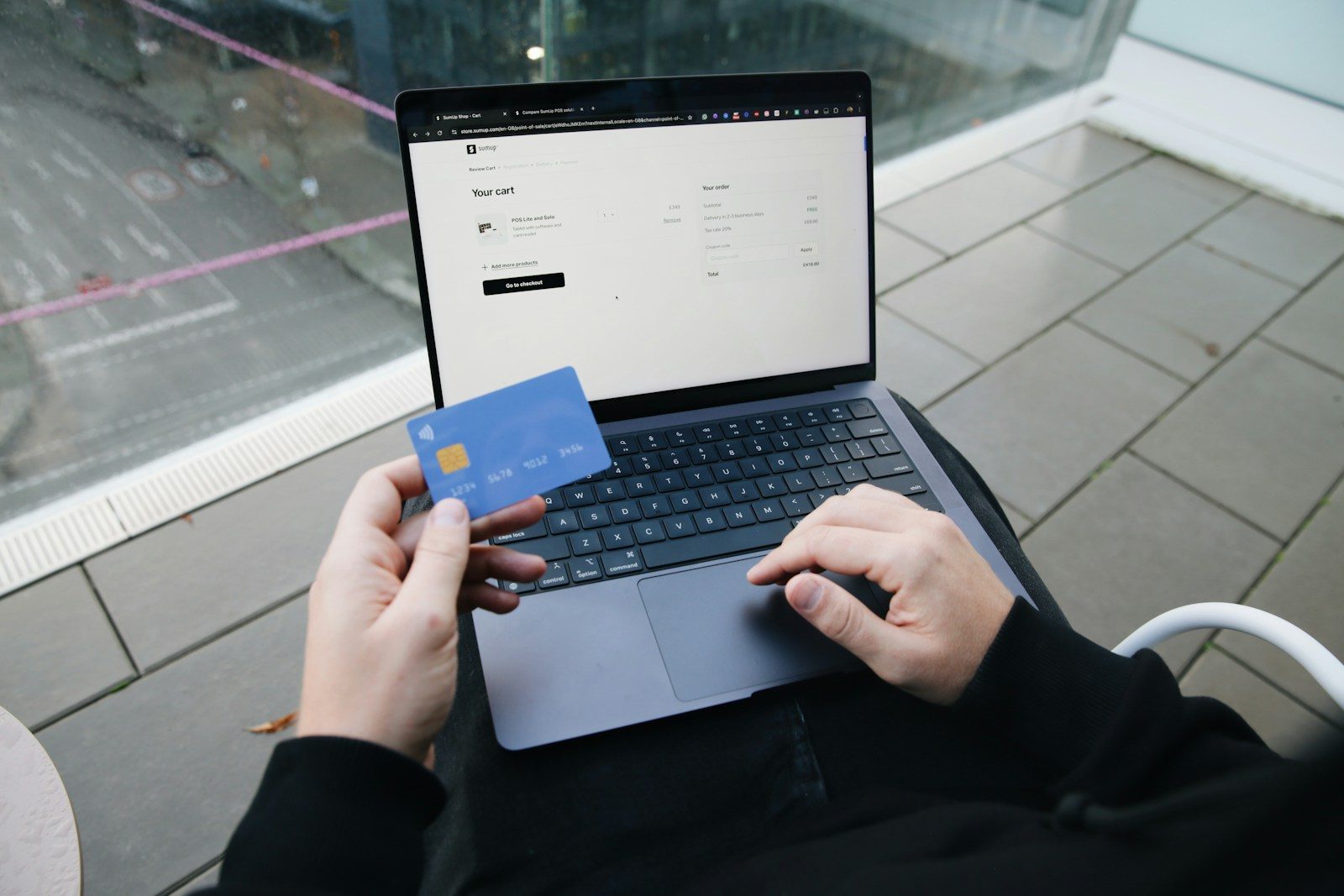
2D Payment Gateways for Risk-Managed Flow of Transactions Without OTP
Why a 2D Payment Gateway Is a Risk Decision, Not Just a Checkout Choice
2D payment gateway’ is an industry term commonly used for a card-not-present payment flow that proceeds without 3-D Secure authentication. In EMV 3DS, the three domains are the merchant/acquirer domain, issuer domain, and interoperability domain.Therefore, the payment is processed immediately after the card data is entered. In practice, clients can pay faster as they do not need to enter OTPs, SMS codes, or pass biometric verification to approve the operation. This results in less friction and faster payments, but e-commerce and its clients become more vulnerable to fraud and technical errors. Therefore, choosing the right payment gateway should be the merchant’s decision. Before making it, a business should consider the basic information about what 2D payment gateways offer.
Transaction Flow as the Key Difference Between 2D and 3D Payment Gateways
Compared to 3D payment systems, this option has a more direct and brief flow. In general, this is how a 2D payment gateway works:
- Entering the card details. Buyers input payment data into the fields on the purchase page.
- Processing the data. The gateway encrypts the basic card details and sends them to the acquirer. A big acquiring bank often acts as a payment processor, but smaller institutions may cooperate with third-party processing centers.
- Routing the payment data. The acquirer redirects the protected data to the card network.
- Verifying the buyer’s account. The network checks the fraud markers of the online transaction. Upon payment verification, the system requests the issuer to check for sufficient funds.
- Authorization response. The issuer approves or declines the payment and sends its status back to the buyer through the same channel.
The absence of a 3DS challenge does not mean an absence of security in the checkout process. The acquiring bank and card network detect fraudulent activity on their end. Moreover, the site can implement a multilayered security control system. If well-designed, it can replace verification steps in most cases.
Where the Risk Moves When 3D Secure Authentication Is Removed
According to Signifyd, 3D payment gateways are more secure than 2D ones: the authorization step eliminates 82% of losses due to fraud chargebacks. Foregoing it leads businesses to many more legal, financial, and operational issues related to payment liability. These are the areas where the 2D payment gateway risk rises drastically:
- Fraud exposure. Without an additional authentication step by the holder, the card number and other payment data are more vulnerable to both hacking and physical card theft.
- Operational disputes. When carrying the full responsibility for checkout operations, the merchant faces frozen funds in case of disputes. Moreover, the business site is obliged to cover the clients’ chargebacks instead of the bank.
- Burden of evidence. An e-commerce site, not the bank, has to prove the legitimacy or fraud of the transaction against the client’s claims.
- Approval rate. Sites skipping payment authorization steps are monitored by issuing banks much more closely. If the bank registers numerous spikes of suspicious payment activity, it can freeze the site’s transactions without warning.
- False declines. Setting anti-fraud systems to the highest sensitivity level (an obvious response to the increased risk) results in more false declines and higher costs for manual processing.
This is a general list. Exact weak points and checkout experiences are individual for each merchant site and mostly depend on its agreement with the acquiring bank, business model, and corporate rules.
Controls That Make a 2D Flow Manageable
No control can protect the site 100%. However, 2D payment gateway security features can be reinforced by an appropriate layered-control model. This approach should
combine measures securing the process and related data comprehensively, with the integration of AI solutions. The following tools are the most important:
- Merchant underwriting. Before allowing the business to accept non-OTP payments, the bank evaluates the corporate documentation, sales volume, legal compliance, and risk level in its niche.
- Transaction limits. Single-transaction and periodic limits for 2D gateway payments allow merchants to decrease losses in case of fraud.
- Velocity and anomaly checks. The system monitors user behavior, particularly payment frequency, to detect and prevent possible fraud involving stolen cards.
- Device and location verification. Digital fingerprinting, geolocation, proxy, and device identifiers help find inconsistencies with the actual cardholder data.
- Tokenization. Replacing clear payment data with tokens useless outside the site prevents leaks of buyers’ basic card information and other sensitive payment data.
- Data protection. To reinforce complex encryption, the system implements data minimization. Account-data storage should be limited to what is necessary for legal, regulatory, and business purposes. The data must be protected and securely deleted or rendered unrecoverable when it is no longer required.
- Real-time monitoring. The system involves special software, including AI models, to collect and analyze user behavior anomalies in real time and prevent ongoing threats.
- Manual review. The system can hold some types of payment processes and pass them to human analysts to check for suspicious details.
- 3DS fallback. Redirecting high-risk payments to the 3DS authentication page replaces transaction declines and saves merchants’ money.
This way, a low-risk payment, like a monthly automatic subscription charged from a registered client’s card, needs a bare minimum of these tools and easily passes through a 2D payment gateway. Meanwhile, a ticket size 50 times larger than the average volume paid from abroad can signal fraud and requires additional authentication.
Deciding on a Framework for Secure Payment Transactions Without OTP
Selecting a framework requires a complex analysis of the business on the one hand and the candidate services on the other. Particularly, these factors influence how to choose a 2D payment gateway to provide secure and fast payments:
- Business model. It determines the risk level the e-commerce site carries and shapes a customized control toolkit.
- Geography and card combination. US legislation does not require 2FA or its alternatives for all payments. But other jurisdictions can make it mandatory, which should be taken into account when processing international payments.
- Ticket size. The smaller the purchase, the more attractive a 2D payment gateway without additional verification becomes.
- Recurring use case. Regular buyers with frequent transactions or subscribers with the same payment methods typically prefer to bypass 2FA.
- Fraud history. Acquiring configuration and risk controls are the main factors shaping 2D gateway accessibility.
- Chargeback tolerance. Without an applicable 3DS liability shift, the merchant or acquirer generally remains exposed to eligible fraud-related chargebacks. Liability does not depend specifically on whether an OTP was used.
- Data quality. Clients’ personal data, like device fingerprints, identity information, address, behavior patterns, and similar, must have the highest quality possible.
- Fallback capability. A 2D gateway must be backed up by a 3DS solution to process the failed or rejected transactions.
- Acquiring approval. To receive numerous payments without additional verification, the merchant team must get approval from its acquiring bank and credit card companies.
Functioning as a 2D acquiring option, A-pay offers a 2D acquiring option and supports flexible payment configurations. Merchants should confirm available markets, card coverage, risk controls, 3DS fallback, liability allocation, and compliance requirements directly with the provider.
When Hybrid 2D and 3DS Routing Is the Better Model
Comparing 2D vs 3D payment gateways shows two sets of advantages. Fortunately, a strict choice is not obligatory, as the system supports hybrid model creation. The automatic switch between the two modes is primarily designed to maintain the balance between the cost-efficiency and speed of the 2D solution and the safety of the 3D solution. Advanced AI models review data related to user behavior, IPs, and devices and determine whether the transaction is safe or suspicious. Safe payments are instantly processed by the 2D gateway. If there is a data mismatch or another increased risk marker, the system launches a step-up window with an obligatory OTP, biometric, or other authentication.
In practice, this compromise is optimal for most e-commerce sites. According to the Baymard Institute, 1 in 5 customers ready to purchase abandons their cart due to an overly long or complicated checkout process. A 2D gateway without additional authentication can return these lost clients to the e-commerce site and increase its conversion rates. Thanks to smart routing, the site does not have to compromise everyone’s security for the convenience of a few, as an additional 3DS step-up procedure processes suspicious cases only.
Questions to Resolve Before Going Live
Any error or missed detail can delay the integration for days or even stop it. Thus, before starting the development, consult this 2D payment gateway integration checklist to answer the most essential questions:
- Who approves the flow?
- Which markets and cards are applicable?
- How do limits work?
- How do monitoring and fallback function?
- Who processes disputes?
- How do approval, fraud, and chargeback indicators work?
- What are the settlement and reporting terms?
Thoroughly discussed, these items can decrease risks and clarify forgotten yet important details. This way, the development team has a much better chance to map the API successfully.
Conclusion
This solution is far from being a shortcut – it is a full-fledged acquiring configuration. A risk-managed 2D payment gateway is a justified choice only when it is reinforced by a set of security tools and clear responsibility.