
What to Do When a Seller Gives a Fake Tracking Number
Online shopping has exploded in recent years. In 2020 more than 131 billion packages were shipped worldwide and forecasts show U.S. e‑commerce users will grow to over 333 million by 2029. With so many parcels in transit, most sellers provide a tracking number so you can follow your order from the warehouse to your doorstep. Unfortunately, scammers have learned to exploit that system. They may send a fake tracking number to delay a refund or use a phishing text to steal personal data. This article explains how these schemes work and what you can do to protect yourself.
How Fake Tracking Number Scams Work
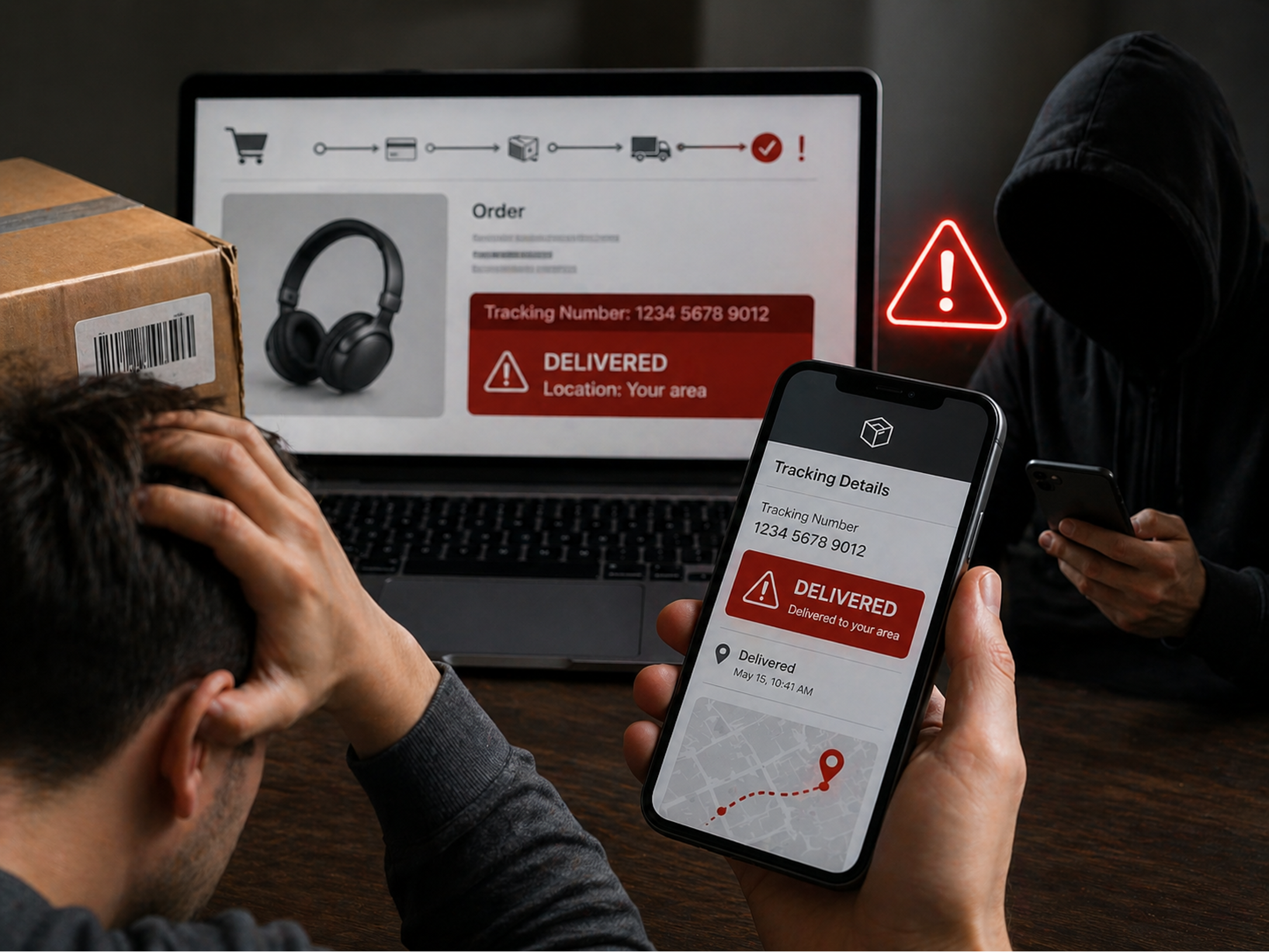
There are two main varieties of fake‑tracking scams. One targets buyers directly. A scammer sends a bogus tracking number after you place an order. When you check it, the system might show the package has already been delivered. According to an investigation by Stacker and Spokeo, criminals often hijack legitimate tracking numbers from deliveries going to someone else in your area. Because a carrier’s system shows the item as delivered, the scammer hopes you will not be able to open a claim with the marketplace or payment service.
The second form is a phishing or “smishing” attack. Scammers send a text message with a fake shipment tracking code and a link to “update your delivery preferences.” The U.S. Federal Trade Commission warns that these texts often appear to come from legitimate carriers like FedEx, UPS or the U.S. Postal Service (USPS). If you click the link, you may end up on a fake site where criminals try to collect credit‑card details. In another warning, the U.S. Postal Inspection Service (USPIS) notes that unsolicited text messages with tracking links are scams. USPS never sends a tracking text with a link unless you’ve signed up for updates on that specific package.
Why do criminals use text messages? People ignore many suspicious emails but still tend to open texts. Research cited by Stacker shows that up to 98 % of text messages are opened, often within minutes. That high open rate makes smishing attractive to scammers.
Spotting a Fake Tracking Number
Check the number’s format
Every carrier uses specific formats for their tracking numbers. A lazy scammer may send a random string that doesn’t match any official pattern. If the number you received doesn’t look like the examples provided by USPS or another carrier, it’s likely fake. The cybersecurity firm Keeper Security explains that scammers sometimes invent numbers or reuse numbers from orders that have already been delivered.
Use official sites or reputable tools
Never click a link in an unsolicited message. Instead, open a new browser tab or the carrier’s app and enter the tracking number manually. For USPS shipments, you can use the official tracking page. Services such as https://trackingpackage.com/usps-tracking allow you to check a USPS number across carriers without visiting multiple sites. If the number does not appear or shows a delivery that doesn’t match your purchase, you are likely dealing with a scam.
Beware of suspicious links and requests
Phishing links are often disguised as buttons or shortened URLs. Hover over or long‑press the link to see its destination. If it points to anything other than the carrier’s official website, don’t click. Keeper Security also warns that scammers may ask for additional personal information or extra fees after sending the tracking number. Legitimate carriers will not request payment or personal data via text or email.
Look for mismatched status
If you enter a tracking number and it shows “Delivered” before you even expect to receive your parcel, that is a red flag. Keeper Security notes that scammers often use numbers from packages already delivered to another address. Always cross‑check the shipping date and delivery address on the tracking details with your purchase receipt.
Steps to Take When You Suspect a Fake
- Document everything. Save screenshots of your order confirmation, any emails or texts from the seller and the tracking information. This documentation will help when you file a complaint.
- Contact the carrier. Reach out to USPS, UPS or whichever service is listed on the tracking number. Ask if the number is valid and whether the shipment was sent to your address. If they can confirm in writing that the package did not go to you, it strengthens your case.
- Confront the seller. Explain that the tracking number is invalid and request the correct one. Honest sellers will resolve the issue quickly. If the seller does not respond or refuses to help, open a dispute with the marketplace (eBay, Amazon, etc.) or your payment provider. Payment services like PayPal and credit‑card companies generally allow you to file a “not received” claim. Provide them with your documentation and any statement from the carrier.
- Report the scam. If the message involves USPS or uses their name, forward the entire text or email (without clicking the link) to spam@uspis.gov. For other carriers, file a complaint on their websites. You can also report the scam to the FBI’s Internet Crime Complaint Center (IC3) and the FTC’s Report Fraud site. These agencies track fraud patterns and can help you develop a recovery plan.
- Monitor your financial accounts. If you clicked a suspicious link or provided any information, contact your bank or credit‑card issuer immediately. They can watch for unauthorized charges and may replace your card. USPIS warns that criminals use smishing to steal Social Security numbers, birth dates and other personal details, so consider placing a fraud alert or credit freeze if you shared sensitive data.
Staying Safe in the Future
- Buy from trusted sellers. Whenever possible, purchase from established retailers or marketplace sellers with solid reviews. If a product is only available from an unfamiliar site at a deep discount, it may be risky. Keeper Security advises researching the company and checking their URL with tools like Google Transparency Report to ensure the site is legitimate.
- Verify immediately. After every purchase, log in to your account or check the confirmation email to find the official tracking number. Use the carrier’s site or a trusted tracking service to verify that the number is active and shows the correct destination.
- Ignore unsolicited messages. USPIS states that USPS will never send tracking texts or emails with a link unless you signed up for that specific package. If you receive an unexpected message about a shipment, delete it. According to the Better Business Bureau, if you think a message might be legitimate, open a separate browser or device and type the tracking number into the real carrier website instead of clicking the link.
- Keep a log of your orders. The BBB recommends writing down what you ordered, the expected delivery date and the shipping method. A simple spreadsheet makes it easier to spot any shipment that appears unexpectedly.
Why It Matters
Fake tracking numbers are more than an inconvenience. They are often part of wider fraud schemes that can lead to identity theft, unauthorized charges and lost goods. And as online shopping grows, so does the opportunity for scammers. The high volume of packages and the near‑instant opening of text messages make these schemes profitable. At the same time, consumers increasingly expect real‑time tracking and proactive updates. A survey from the logistics industry found that 64 % of customers consider real‑time tracking essential and 82 % expect proactive notifications. When a seller abuses that trust with a fake tracking number, it undermines confidence in e‑commerce.
Staying vigilant, verifying tracking numbers through trusted channels and knowing where to report scams can help you avoid being defrauded. If you ever doubt a shipping notification, remember two simple rules: never click a suspicious link, and go directly to the carrier’s site or a trusted tracking service like TrackingPackage. Taking these steps keeps your deliveries—and your personal information—safe.