
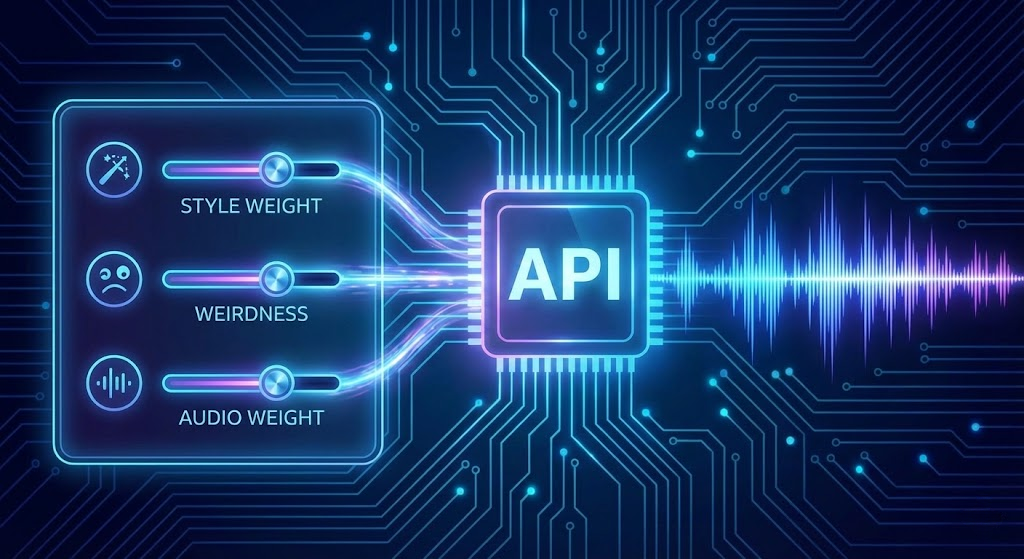
7 Suno API Platforms You Should Know in 2026
Introduction
If you’re building with AI-generated music, the Suno API is probably already somewhere on your list. It’s the programmatic layer behind Suno AI’s text-to-music engine — the part that turns a text prompt into a finished track, handles vocal separation, extends existing audio, and generates lyrics at a scale that actually works for production apps. Whether you’re embedding music into a product, automating audio content creation, or experimenting with what generative music can do, the Suno API is the tool that makes it programmable.
The tricky part is that a growing number of third-party platforms now offer their own access to the Suno API — each with different pricing, reliability commitments, and extra features. Some are purpose-built for music generation; others fold it into broader AI marketplaces. Finding the one that actually fits your workflow takes more than reading a landing page.
We tested the options and narrowed it down to seven. Here’s what each one is actually like to work with.
Website List
1. APIPASS
What is APIPASS
APIPASS is an API marketplace that lets developers browse, connect, and manage a large number of APIs from one place. For music generation specifically, it provides direct access to the Suno API — meaning you can integrate the Suno AI Music Generator into your application without dealing with authentication infrastructure or managing provider accounts separately. Text-to-music generation, track extension, vocal separation, AI lyrics — all of it is available through the same dashboard you’d use for other API integrations. If your project needs more than just music (image generation, other AI models), APIPASS covers a wide enough range that you can manage it all in one place rather than stitching together multiple providers.
Features
- Direct access to the Suno API and Suno AI Music Generator for music generation workflows
- Marketplace covering thousands of APIs across different AI categories
- Wide selection of up-to-date AI models for creative and operational use cases
- Reliable performance and compatibility across supported integrations
- Step-by-step documentation for straightforward onboarding
- 24/7 customer support for queries and troubleshooting
Pros and Cons
Pros:
- One place to access the Suno API alongside thousands of other integrations
- Quick to get up and running compared to direct API setup
- Documentation is thorough across most supported APIs
- Good model variety if your project covers more than music generation
Cons:
- The number of options can be disorienting if you’re new to API marketplaces
- Some integrations are stronger than others — quality isn’t completely uniform
- Limited offline API management functionality
Price
- Text to Music: 2.5 credits per run (≈ $0.014) — covers Text to Music, Extend Music, Upload Extend Music, Cover Music, Generate Lyrics, and Vocal Separation
2. EvoLink
What is EvoLink
EvoLink is a unified API platform for accessing multimodal AI models across chat, image, and video processing. The main pitch is cost reduction — it claims teams can cut AI spending by 20–70% compared to managing individual provider accounts — while keeping uptime at 99.9% for production workloads. If you’re running multiple AI capabilities and want to consolidate without taking a reliability hit, EvoLink is built for that scenario.
Features
- Single API covering top multimodal AI models across chat, image, and video
- Pricing structured to undercut managing separate provider subscriptions
- 99.9% uptime SLA for production environments
- Photo manipulation and image storytelling features
- Regular updates as new models and capabilities become available
Pros and Cons
Pros:
- Cost-effective access to multimodal AI through a single integration
- Strong reliability track record for production workloads
- Covers image and video generation alongside other AI tasks
- Image editing and storytelling features are genuinely capable
Cons:
- Customer support documentation is harder to find than it should be
- There’s a learning curve if you’re new to working with multimodal AI APIs
- Performance varies depending on which models and use cases you’re running
Price
- Free Plan: Basic features, limited to 8 songs per month
- Suno V4 Beta: $0.118 per song (8 Credits)
- Suno V4.5 Beta: $0.118 per song (8 Credits)
- Suno V4.5 All Beta: $0.118 per song (8 Credits)
- Suno V4.5 Plus Beta: $0.118 per song (8 Credits)
- Suno V5 Beta: $0.118 per song (8 Credits)
3. Replicate
What is Replicate
Replicate lets you run AI models through an API, with a community model library that now covers over 19,000 published models. The entry point is deliberately low — you can get a model running in a single line of code — but the platform scales up to custom fine-tuning on your own data, which is where it starts to stand out from simpler inference APIs. If you need a model adapted to your specific content or style, Replicate gives you the infrastructure to do that without building training pipelines from scratch.
Features
- Deploy a model to production with a single line of code
- Fine-tune models on your own data for task-specific performance
- Catalog of thousands of community-published, production-ready models
- Training UI accessible to non-ML engineers
- Strong image generation support including personalization and style control
Pros and Cons
Pros:
- As fast as it gets to go from picking a model to running it in production
- Community model library is large and well-maintained
- Fine-tuning with your own data is a real differentiator for specific use cases
- Custom deployment options offer flexibility most inference APIs don’t
Cons:
- Advanced features have a real learning curve
- Some use cases hit customization limits that are hard to work around
- Large custom model training can get expensive on compute
Price
- $0.018 per run — Nvidia T4 GPU, approximately 79-second prediction time, open source and Docker compatible
4. AIMLAPI
What is AIMLAPI
AIMLAPI gives you access to 500+ AI models through a single API — chat, image synthesis, voice, video, and music composition all in one place. The goal is to reduce the overhead of integrating multiple AI capabilities by handling everything through one endpoint, with moderation and safety controls included for teams shipping to general audiences. It’s a practical choice if you’re building something that touches several AI modalities and don’t want to maintain separate provider relationships for each one.
Features
- 500+ AI models accessible through a single API endpoint
- Music generation producing multi-part compositions including vocals and arrangements
- High-fidelity speech synthesis suitable for professional production use
- Low-latency voice generation for interactive and real-time applications
- Built-in moderation and content safety controls for enterprise use
Pros and Cons
Pros:
- Strong performance on conversational and narrative AI tasks
- Music output includes real vocal arrangements, not just backing tracks
- Voice output sounds natural and holds up well in real-time environments
- Usage-based pricing means you’re not paying for capacity you don’t use
Cons:
- Higher per-token cost for advanced features compared to some alternatives
- Limited information on mobile app capabilities and performance
- Dependent on internet connectivity — minimal offline functionality
Price
- Pay As You Go: Prepaid $20 — all models included, no usage caps, starts at 40M credits, crypto payments accepted, pay only for what you use, priority human support
- Enterprise: Custom pricing — dedicated servers, custom/private models, unlimited RPM & TPM, extended data storage, shared Slack channel, full staff training and integration support
5. SunoAPI
What is SunoAPI
SunoAPI is focused on one thing: fast, affordable, watermark-free music generation via API. It supports both vocal and instrumental tracks and is built for commercial use from day one — no extra licensing steps. The 20-second streaming response time it advertises is one of the faster turnarounds in this space, which becomes meaningful when you’re building anything close to real-time.
Features
- Streaming output with music generation results in as little as 20 seconds
- Support for the latest AI music models for vocal and instrumental track creation
- Watermark-free output ready for commercial use without additional fees
- Multi-format downloads to suit different project requirements
- Pricing that scales without getting expensive as volume increases
Pros and Cons
Pros:
- Fast turnaround — results in around 20 seconds is genuinely useful
- Watermark-free, royalty-free output for commercial projects
- Supports both vocal and instrumental generation
- Accessible pricing across different usage levels
Cons:
- No clear information on customer support response times
- Not built for offline music generation workflows
- Could get costly at large enterprise scale depending on volume
Price
- Basic: $5 — 1,000 Credits
- Standard: $50 — 10,000 Credits
- Premium: $500 — 105,000 Credits
- Enterprise: $1,250 — 275,000 Credits (5% off)
6. API.box
What is API.box
API.box provides access to the Suno AI API for converting text prompts into high-fidelity music. It’s built around stable, high-concurrency performance and includes features that go beyond basic generation — vocal removal, AI-generated lyrics, timestamped lyric display, and WAV downloads. The platform is aimed at developers and content creators who want to integrate music generation into apps or workflows without a complicated setup process.
Features
- Text-to-music generation via the Suno AI API at a competitive price point
- High-concurrency performance for stable streaming under load
- Vocal removal, AI lyrics, and timestamped lyric display included
- Simple integration for web and application development
- WAV format downloads for professional-grade audio output
Pros and Cons
Pros:
- Tiered pricing with multiple plans to match different usage levels
- Handles concurrent requests well for production use
- Covers vocal removal, AI lyrics, and WAV output in one platform
- Clean API integration without much setup friction
Cons:
- Limited customization for specific music generation styles
- Response times can vary — averaging around 25 seconds but not always consistent
- Relies on external service availability, which introduces some downtime risk
Price
- Basic: $5 — 1,000 Credits
- Standard: $50 — 10,000 Credits
- Premium: $500 — 105,000 Credits
- Enterprise: $1,250 — 275,000 Credits
7. APIframe
What is APIframe
APIframe connects to multiple AI media generation tools — Midjourney, Luma, Suno, and others — through a single API. The idea is straightforward: instead of maintaining separate integrations and subscriptions for each tool, you handle it through one endpoint. If your project generates images, video, and music and you’d rather not manage three separate APIs, APIframe is worth a look.
Features
- Single API access to multiple AI media models including image, video, and music generation
- Image generation with style controls and quality options
- Lightweight models available for low-latency use cases
- Typography and text rendering support for image generation tasks
- Developer documentation covering major implementation scenarios
Pros and Cons
Pros:
- Genuinely reduces integration overhead when using multiple AI media tools
- Image quality is solid across the models it supports
- Single subscription replaces several separate ones
- Documentation is thorough enough to get through setup without guessing
Cons:
- Getting the most out of every model takes more effort than a single-purpose tool
- Documentation gets thin for more niche or specific use cases
- Output can vary depending on which model and configuration you’re using
Price
- Free: $0 — 20 credits, full access to Suno features, API access, webhook support, integrations
- Basic Plan: $19/month — 1,000 credits/month, all Suno features, API access, webhook support, integrations
- Starter Plan: $99/month — 5,500 credits/month, all Suno features, API access, webhook support, integrations
- Growth Plan: $199/month — 12,000 credits/month, all Suno features, API access, webhook support, integrations
Key Takeaways
- The right Suno API provider depends on your actual use case — music-only platforms and broader AI marketplaces serve different needs, and mixing them up costs time.
- Pricing structures vary significantly. The cheapest per-run cost doesn’t always mean the best total value once you account for rate limits, output quality, and support.
- Use the free tiers. There’s no substitute for testing against your real workload before committing to a paid plan.
- Look for user feedback specific to music generation quality, not just general API performance — they’re different things and reviewers don’t always distinguish between them.
- Platform update cadence matters. The Suno API ecosystem moves fast, and a provider that isn’t keeping up will become a liability.
- Don’t skip support and documentation evaluation. They’re often what separates a smooth integration from weeks of back-and-forth.
- Build for where your project is heading, not just where it is now. Switching providers mid-project is painful and expensive.
Conclusion
The Suno API has become a serious building block for AI-powered music generation, and the seven platforms covered here represent the most practical ways to put it to work in 2026. Some are built specifically around the Suno AI Music Generator and keep the experience focused. Others fold it into broader AI platforms that might suit you better if music is just one part of what you’re shipping.
None of them are the obvious right answer for every project. The differences that matter — latency, customization depth, pricing at your actual volume, how support responds when something breaks — only become clear when you test them against real requirements. Start with the free tiers, run them against your actual use case, and talk to support before you commit. That’s genuinely the fastest path to a decision you won’t regret six months from now.